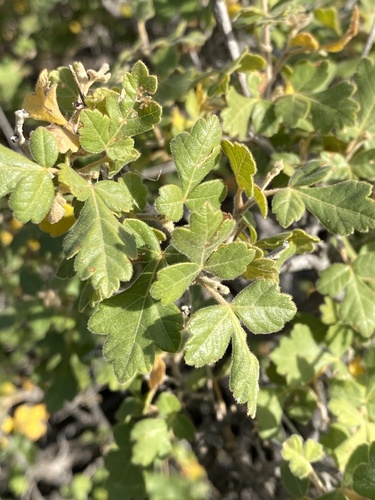
Skunkbush Sumac
Rhus trilobata
A champion of backyard biodiversity, Skunkbush Sumac offers year-round interest with its aromatic foliage, tart red berries, and spectacular autumn colors. This hardy native shrub is a magnet for everything from delicate pollinators to overwintering songbirds.
Quick Identification
Size
Typically reaches 0.6–2.5 meters (2–8 feet) in height with a similar spread
Colors
Deep green foliage in summer; vibrant red, orange, or yellow leaves in autumn; small yellowish flowers; bright red, fuzzy berries
Key Features
- Three-lobed leaves resembling small oak leaves
- Small clusters of fuzzy, red berries (drupes)
- Dense, multi-stemmed growth habit
- Pungent, skunk-like odor when leaves or stems are bruised
When You’ll See Them
Behavior
Skunkbush Sumac is a resilient, deciduous shrub that acts as a foundational species in many North American ecosystems. Unlike some of its more aggressive sumac cousins, this species grows in tidy, mounded thickets, making it an excellent 'nurse plant' that provides shelter for germinating seeds of other species. In early spring, it is one of the first shrubs to provide life to the landscape, producing tiny yellow flower clusters that offer a critical early nectar source for emerging native bees and butterflies.
As the season progresses, the shrub becomes a hub of social activity for wildlife. Its dense, interlocking branches create a fortress-like environment that is highly sought after by ground-nesting birds and small mammals seeking protection from aerial predators. By late summer and autumn, the plant produces distinctive red, acidic berries. While these are often too tart for many animals to eat immediately, they persist through the winter, serving as a vital 'emergency' food source when other forage is buried under snow.
EverydayEarth exclusive
Camera Tips
Skunkbush Sumac is a fantastic focal point for a backyard camera because it serves as a natural 'wildlife supermarket.' To capture the highest diversity of species, mount your camera approximately 18 to 24 inches off the ground, pointing toward the interior of the shrub or at a cluster of berries. This low angle is perfect for capturing the secretive movements of spotted towhees, dark-eyed juncos, and chipmunks that frequently forage in the leaf litter beneath the branches.
During the spring blooming period (usually March to May), switch your camera to a high-speed trigger or video mode. The small yellowish blossoms attract a wide variety of pollinators, including hairstreak butterflies and metallic green sweat bees. If your camera has a macro or close-focus setting, this is the time to use it. For the best lighting, position the camera to face north or south; this avoids the harsh glare of the rising or setting sun that can wash out the intricate details of the three-lobed leaves.
In the winter, the bright red berries are the main attraction. Birds like cedar waxwings and American robins will visit the bush in flocks to feed on the berries when other food is scarce. To capture these interactions, place your camera about 3-4 feet away from a berry-heavy branch. If you live in a snowy climate, reduce your camera's exposure compensation by one stop if possible; the bright white snow can often cause the camera to underexpose the birds, making them look like dark silhouettes against the bush.
Finally, consider the seasonal growth when choosing your placement. Skunkbush Sumac can grow quite densely, and a branch swaying in the wind can trigger hundreds of false 'empty' photos. Clear away any small, thin twigs directly in front of the lens, and use a medium sensitivity setting on your PIR sensor to ensure you are capturing animal movement rather than just the rustling of the skunk-scented leaves.
Similar Species
Species that look similar or are commonly confused with Skunkbush Sumac.
Frequently Asked Questions
Record Skunkbush Sumac at your habitat
Connect a camera to start building your own species record — AI identifies every visitor automatically.