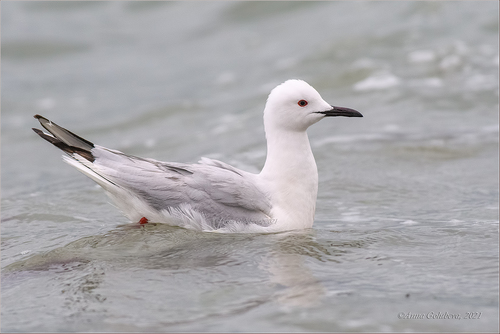
Slender-billed Gull
Chroicocephalus genei
With its long, elegant neck and a delicate rose-pink blush on its breast, the Slender-billed Gull is the 'ballerina' of the coastal marshes. Unlike its noisier cousins, this refined gull prefers the quiet of salt pans and lagoons over city harbors.
Quick Identification
Size
Length 37–45 cm (15–18 in); wingspan 90–110 cm (35–43 in); weight 220–350 g (7.8–12.3 oz)
Colors
White body with a delicate pinkish flush on the breast in summer; pale gray wings; dark red-to-blackish bill and legs
Key Features
- Long, slender, drooping dark red bill
- Elongated neck and sloping forehead
- Pale yellow eyes with a white ring
- Lacks a dark hood in all plumages
When You’ll See Them
Geographic range
Where Does the Slender-billed Gull Live?
The Slender-billed Gull is native to the coastal regions surrounding the Mediterranean Sea, the Middle East, and the northern reaches of the western Indian Ocean. Its core range spans from Spain and North Africa across to Pakistan and western India, where it frequents saline wetlands and coastal marshes. While some populations are resident, many migrate south for the winter to the Red Sea, the Persian Gulf, and the African coast.
Basemap © OpenStreetMap contributors
Behavior
Slender-billed Gulls are highly social and elegant birds, often seen in small to medium-sized flocks along coastal regions. Unlike many of their more aggressive relatives, they are specialized foragers that prefer saline environments, frequently feeding in salt pans and shallow lagoons. They exhibit a characteristic feeding behavior where they dip their heads into the water or swim while picking prey from the surface, rarely scavenging in urban landfills or trash heaps.
During the breeding season, they form dense, noisy colonies, often alongside other terns and gulls. While they are generally wary of humans, they can become accustomed to observers in protected coastal parks and reserves. Their communication includes a variety of nasal, harsh calls, though they are notably quieter and more refined in movement than the larger 'raucous' gulls found in busy harbors.
EverydayEarth exclusive
Camera Tips
Capturing the Slender-billed Gull on camera requires focusing on their preferred 'salt-and-sand' habitats. Since these birds are rarely found in standard inland backyards, placement is everything. If you live near a coastal lagoon or salt pan, position your AI camera on a low tripod or a weighted 'ground-pod' near the waterline. Aim for a low angle that captures the water's surface, as their pinkish-white plumage reflects beautifully off the water during the golden hours of dawn and dusk.
Unlike backyard songbirds, you cannot attract this species with traditional birdseed. If you are on private coastal property, creating a shallow 'loafing' area with some flat rocks or a sandbar can encourage them to land and preen. Because they are social, a single bird landing often attracts others, so ensure your camera field of view is wide enough to capture a small group rather than just a single individual.
Lighting is your most important tool for this species. To emphasize the delicate pink hue on their breast—which is their most striking feature—ensure the camera is positioned with the sun behind it during the early morning. Overexposed midday sun can wash out their pale features, making them look like a common Black-headed Gull. Set your AI trigger to 'High Sensitivity' to catch their quick dipping motions as they forage in the shallows.
Similar Species
Species that look similar or are commonly confused with Slender-billed Gull.
Frequently Asked Questions
Record Slender-billed Gull at your habitat
Connect a camera to start building your own species record — AI identifies every visitor automatically.