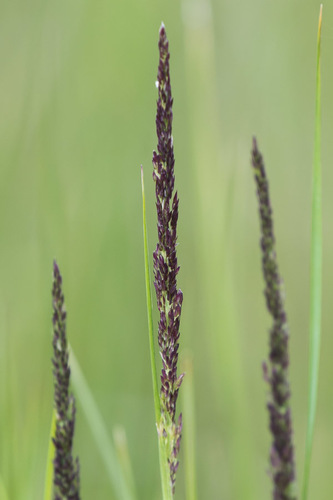
Slim-stem Small-reedgrass
Calamagrostis stricta
A slender, vertical masterpiece of the wetlands, Slim-stem Small-reedgrass adds grace and movement to any damp corner of the garden. Its shimmering seed heads and hardy nature make it a favorite for both wildlife and backyard observers.
Quick Identification
Size
Stems reach 30-100 cm (12-39 inches) in height; leaf blades are 2-4 mm wide.
Colors
Bright green to blue-green foliage; flower panicles emerge with purple or bronze tints, maturing to a light tan or straw color.
Key Features
- Narrow, spike-like flowering panicles that remain tightly contracted
- Stiffly erect, unbranched stems that give a vertical appearance
- Short underground rhizomes that form dense, tidy tufts
- Ligules (membranous scales at leaf bases) that are 2-5 mm long and blunt.
When You’ll See Them
Behavior
Slim-stem Small-reedgrass is a cool-season perennial grass that defines the structural beauty of wet meadows and shoreline ecosystems. It grows primarily in the spring and fall, producing upright culms that remain standing even after the growing season has ended. Unlike more aggressive reed species, this grass grows in organized clumps or small colonies, making it a well-behaved addition to naturalized backyard spaces.
While it may appear stationary, this grass provides a rhythmic 'pulse' to the landscape as it sways in the wind. It serves as a vital nursery for various insect larvae and provides sturdy perches for dragonflies and damselflies. In the backyard setting, it acts as a natural screen and a source of nesting material for birds, interacting with the environment by stabilizing moist soils and filtering runoff.
EverydayEarth exclusive
Camera Tips
To capture the best footage of Slim-stem Small-reedgrass, position your AI camera at a low 'frog's eye' perspective, about 12 inches from the ground. This angle emphasizes the verticality of the stems and allows you to capture the intricate details of the flowering panicles against the sky. Because the grass moves frequently in the breeze, you may need to adjust your camera's motion sensitivity to avoid 'false triggers'—though recording these movements can create beautiful, meditative time-lapse sequences.
Lighting is the secret to making this grass pop on camera. Try to position your camera so the plant is backlit by the early morning or late afternoon sun. This 'golden hour' light catches the fine hairs and awns of the seed heads, making the entire plant appear to glow. If your camera has a macro lens or high-resolution zoom, focus on the panicles in mid-summer when the purple anthers are visible; it provides a stunning contrast to the green foliage that most people miss with the naked eye.
During the winter months, don't put your camera away. Slim-stem Small-reedgrass provides excellent winter interest, and its dried seed heads often attract small songbirds like goldfinches. Mount your camera on a sturdy stake in the mud, ensuring it is level, and aim it toward a cluster of seed heads to catch birds landing to forage. If you are using a camera with AI recognition, the movement of the grass can often 'wake' the camera just in time to catch a bird or insect landing on a stem, provided the trigger speed is fast enough.
Similar Species
Species that look similar or are commonly confused with Slim-stem Small-reedgrass.
Frequently Asked Questions
Record Slim-stem Small-reedgrass at your habitat
Connect a camera to start building your own species record — AI identifies every visitor automatically.