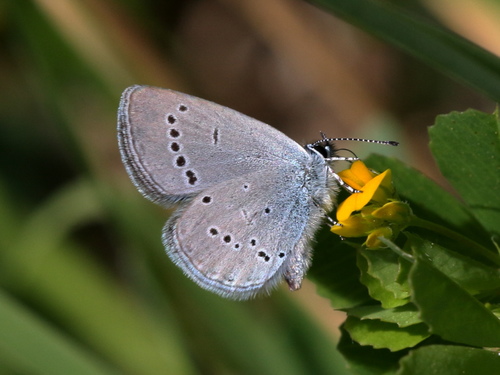
Small Blue
Cupido minimus
Meet the Small Blue, a tiny treasure of the butterfly world that trades vibrant colors for subtle elegance. As the smallest butterfly in the Palearctic, this pint-sized inhabitant of chalky grasslands is a master of blending in.
Quick Identification
Size
Wingspan of 18–30 mm (0.7–1.2 inches)
Colors
Upper wings are primarily dark sooty-brown; males have a light dusting of silvery-blue scales at the wing base, while females are purely brown. Undersides are pale silver-grey with small black spots ringed in white.
Key Features
- Smallest butterfly species in its range
- Upper wings are dark brown, not blue
- Pale grey undersides with a series of small, neat black spots
- Fringes of the wings are distinctly white
When You’ll See Them
Behavior
Despite its name, the Small Blue is a modest butterfly that often goes unnoticed due to its size and dark coloring. Unlike many other blues, they do not wander far, typically living in tight-knit colonies centered around their primary food source. They are social creatures in their own right, and you might find dozens of them resting together on tall grass stems as the sun goes down.
A fascinating, if somewhat grim, aspect of their behavior occurs during the larval stage. The caterpillars are known to be cannibalistic, often consuming smaller larvae if they encounter them on the same flower head. As adults, they are much more peaceful, spending their days flitting low over the ground in search of nectar or gathering in 'puddle clubs' where males sip essential minerals from damp earth.
EverydayEarth exclusive
Camera Tips
To capture the Small Blue on camera, you must think small and stay low. These butterflies rarely fly more than a few feet above the ground, so position your camera at a height of 12 to 18 inches. Mounting your AI camera on a short tripod or a ground stake near a cluster of Kidney Vetch—their absolute favorite plant—is the most effective way to ensure they enter the frame.
Because the Small Blue is so tiny, use a camera with a good macro capability or a close-focus lens. If your AI camera allows for custom trigger zones, focus the 'hot zone' directly on the flower heads of the host plant. They are most active in bright, still sunshine, so avoid placing cameras in wind-whipped corridors where they are unlikely to settle. Early morning is a golden opportunity; before they have warmed up enough to fly, they can be found resting vertically on grass stems, providing perfect, still subjects for high-detail photography.
For those using trail cameras, high-speed burst mode is essential. Their flight is weak and fluttery, making it difficult to catch a clear shot while they are in motion. By setting a 3-to-5-shot burst, you increase the chances of getting that perfect 'wings-open' shot that shows the subtle blue dusting on the male's wings. Since they are attracted to minerals, a 'puddle lure'—a patch of soil kept consistently damp with a little sea salt mixed in—can sometimes entice males to land and stay still for several minutes.
Similar Species
Species that look similar or are commonly confused with Small Blue.
Holly Blue
Much brighter blue on the upper wings and lacks the orange spots on the underside found in many other blues; it also flies much higher, often at head height or near trees.
Common Blue
Larger than the Small Blue; males are bright violet-blue and females have orange spots on the wing margins which the Small Blue lacks.
Frequently Asked Questions
Record Small Blue at your habitat
Connect a camera to start building your own species record — AI identifies every visitor automatically.