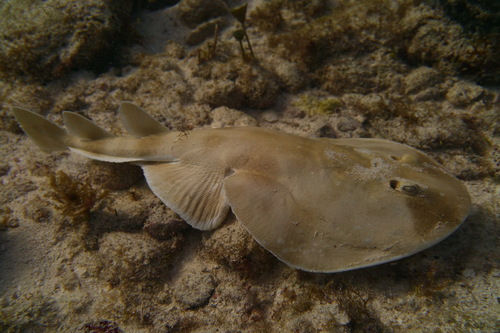
Small Electric Ray
Narcine bancroftii
A pint-sized powerhouse of the surf zone, the Small Electric Ray is a master of disguise and bio-electricity. Found hiding in the shallows, this fascinating fish brings a spark of mystery to our coastal shorelines.
Quick Identification
Size
Typically 15-45 cm (6-18 inches) in length; weight usually stays under 1 kg (2.2 lbs).
Colors
Dorsal surface is yellowish-brown to tan with dark, irregular rings or solid spots; the ventral side is white or cream-colored.
Key Features
- Circular body disc with two distinct dorsal fins
- Dark rings or spots scattered across the back
- Kidney-shaped electric organs visible through the skin
- Short, stout tail without a stinging spine
When You’ll See Them
Behavior
The Small Electric Ray is a master of camouflage, spending much of its day partially buried beneath a thin layer of sand or silt. Unlike many of its more mobile relatives, this species is relatively sluggish and relies on its 'electric' personality for both defense and hunting. When threatened or stepped on, it can discharge a mild electric shock of about 14 to 37 volts from its specialized branchial muscles, which is enough to startle a predator (or a human) but generally not dangerous.
These rays are largely solitary and move with a slow, undulating motion of their pectoral fins. Because they inhabit the high-energy surf zone, they are adapted to withstand the constant movement of the tide. While they appear docile, their ability to generate electricity allows them to navigate murky waters and interact with their environment in ways that most other shallow-water fish cannot.
EverydayEarth exclusive
Camera Tips
Capturing the Small Electric Ray on camera requires a specialized approach since they are strictly aquatic and spend most of their time in the surf zone. For beachfront 'backyards,' the best method is to use a waterproof trail camera or a stationary underwater housing mounted to a weighted base. Place the camera in shallow tidal pools or along the edge of seagrass beds during low tide, ensuring it is positioned just a few inches off the bottom to catch the rays as they glide over the sand.
Since these rays are primarily active at night, high-quality infrared (IR) flash is essential. White light can sometimes spook them or reflect harshly off the suspended sand particles in the water. Set your camera to record short video clips (15-30 seconds) rather than still photos, as the movement of the ray's fins and the way it disturbs the sand is the most reliable way to identify them. Look for the 'ghostly' outline of their circular bodies against the dark ocean floor.
To increase your chances of a sighting, look for areas with 'feeding pits'—small depressions in the sand where the rays have been rooting for worms. Placing your camera near these spots or near natural bottlenecks like rock jetty openings can be very effective. Note that because they are slow-moving, you can use a lower trigger speed, but ensure your housing is securely anchored to prevent the tide from carrying your equipment out to sea.
Similar Species
Species that look similar or are commonly confused with Small Electric Ray.
Frequently Asked Questions
Record Small Electric Ray at your habitat
Connect a camera to start building your own species record — AI identifies every visitor automatically.