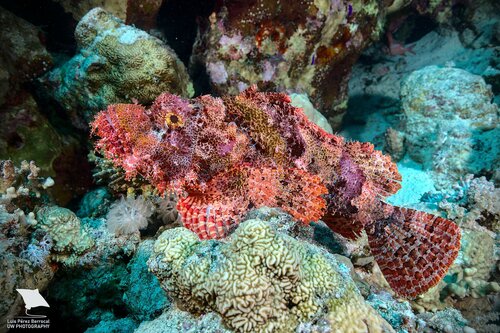
Smallscale Scorpionfish
Scorpaenopsis oxycephala
A silent master of the reef, the Smallscale Scorpionfish uses incredible camouflage to disappear into plain sight. Finding one is a true test of observation for any underwater enthusiast.
Quick Identification
Size
Up to 36 cm (14 inches) in length; typically weighing 0.5 to 1.5 kg (1.1 to 3.3 lbs)
Colors
Mottled patterns of reddish-brown, orange, and white; colors vary significantly to match the surrounding reef environment.
Key Features
- Fleshy tassels or 'beard' on the lower jaw
- Highly camouflaged, skin mimics rock and coral textures
- Large, broad pectoral fins and venomous dorsal spines
- Bulbous eyes situated high on the head
When You’ll See Them
Behavior
The Smallscale Scorpionfish is a quintessential ambush predator, relying almost entirely on its extraordinary camouflage to survive. It spends the daylight hours resting motionlessly on coral heads, rocky ledges, or within crevices. Its skin is often covered in algae or hydroids, further obscuring its outline from both potential prey and predators. Despite their venomous nature, they are non-aggressive toward humans, preferring to remain perfectly still in the hope of going unnoticed.
When hunting, this fish is a master of the 'sit-and-wait' technique. It remains paralyzed in its chosen spot until a smaller fish or crustacean wanders within range. In a split second, the scorpionfish opens its massive mouth, creating a powerful vacuum that pulls the prey inside. Socially, they are mostly solitary, though they may be found in loose proximity to others of their species in areas with high prey density or during mating periods.
EverydayEarth exclusive
Camera Tips
Capturing the Smallscale Scorpionfish on an underwater AI camera or reef rig requires a specialized approach compared to land-based wildlife. Because these fish are nearly stationary, standard motion-detection sensors may struggle to trigger. If you are using a custom underwater trail cam, it is best to set the AI to recognize shapes or textures rather than just movement. Position your camera approximately 12 to 18 inches away from a vibrant coral head or a rocky 'cleaning station' where smaller fish congregate, as these are the scorpionfish's favorite hunting grounds.
Lighting is the most critical element for a high-quality capture. During the day, the scorpionfish's camouflage is so effective that it often appears as a flat, indistinguishable lump in photos. Use side-mounted lights or wait for the 'golden hour' underwater when the sun is at an angle, as this creates shadows that define the fish's tassels and pectoral fins. For night monitoring, use a diffused red-light or low-intensity white-light strobe. Scorpionfish are less sensitive to light than many other reef dwellers, but a harsh, direct beam can still cause them to reposition or wash out the intricate mottled patterns of their skin.
To ensure consistent sightings, look for 'resident' fish. Smallscale Scorpionfish are known for their high site fidelity, often staying in the same square meter of reef for weeks at a time. If you spot one during a dive or on a scout cam, there is a very high probability it will still be there when you return with a more permanent setup. Ensure your camera housing is weighted properly to prevent swaying in the current, which can cause false triggers. Using a wide-angle lens with macro capabilities is ideal, as it allows you to capture the fish in its environment while maintaining enough detail to see the fascinating skin flaps and 'bearded' jaw that give this species its unique look.
Similar Species
Species that look similar or are commonly confused with Smallscale Scorpionfish.
Frequently Asked Questions
Record Smallscale Scorpionfish at your habitat
Connect a camera to start building your own species record — AI identifies every visitor automatically.