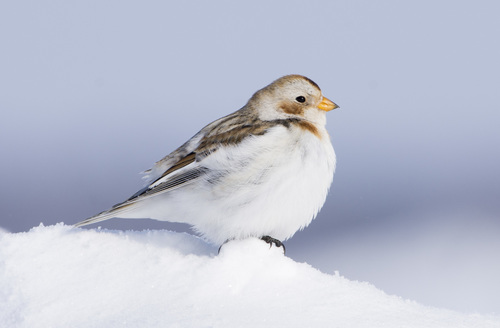
Snow Bunting
Plectrophenax nivalis
A hardy traveler from the high Arctic, the Snow Bunting transforms winter fields into a swirling dance of white and gold. These 'Snowflakes' are the most northerly songbirds on Earth, bringing a touch of the tundra to your backyard.
Quick Identification
Size
Length: 15-18 cm (6-7 in); Wingspan: 30-38 cm (12-15 in); Weight: 30-50 g (1-1.8 oz)
Colors
Winter birds are rusty-brown and white; breeding males are stark black and white; females have more mottled brown-grey on the back.
Key Features
- Large white wing patches visible in flight
- Rust-colored 'smudges' on the face and chest in winter
- Black central tail feathers with white outer edges
- Short, conical yellow bill with a black tip
When You’ll See Them
Behavior
Snow Buntings are restless, social birds that are often observed in large, undulating flocks. During the winter months, these flocks move across open landscapes in a distinctive 'rolling' fashion: birds at the back of the group fly over those at the front to find fresh foraging ground, creating the illusion of a swirling snowdrift. They are strictly ground-dwelling birds that prefer to walk or run rather than hop.
Known as the 'Snowflake Bird,' they are surprisingly tolerant of humans but remain highly active. They spend the vast majority of their daylight hours searching for seeds in windswept fields or along shorelines. Unlike many other songbirds, they rarely perch in trees, preferring the safety of wide-open spaces where they can spot predators from a distance. Their social structure is loose but highly protective, as dozens of eyes help the flock stay vigilant against hawks and falcons.
EverydayEarth exclusive
Camera Tips
To capture high-quality footage of Snow Buntings, you must rethink your camera height. Since these birds are dedicated ground-feeders that almost never use elevated bird feeders, place your AI camera just 6 to 12 inches off the ground. Aim it across a flat, open area like a driveway, a short-grass lawn, or a patch of cleared dirt near a field edge. High-angle shots from a fence post will likely miss the intricate details of their 'frosted' winter plumage.
Attracting them requires a 'ground station' approach. Clear a patch of snow to reveal the bare ground or create a low platform using a piece of plywood. Scatter a mix of cracked corn, white proso millet, and sunflower hearts. Because Snow Buntings are shy about visiting enclosed spaces, ensure your camera and bait station are at least 15-20 feet away from dense brush or buildings, giving them the wide-open sightlines they crave.
Lighting and shutter speed are your biggest challenges with this species. Their white feathers can easily 'blow out' and lose detail in bright, snowy conditions. If your camera allows for exposure compensation, set it to -0.5 or -1.0 to preserve the texture of their wings. Because they are constant movers, use the highest frame rate available (60fps is ideal) to capture their fast-paced foraging behavior and the spectacular white flash of their wings when they take flight.
In extremely cold weather, these birds may visit more frequently as they need to fuel their high metabolism. Check your camera battery often, as the sub-freezing temperatures they prefer can drain power quickly. If you live in a rural or coastal area, consider placing a second camera near a pile of stones or a shoreline wrack line, as they often use these as natural 'lookouts' between feeding sessions.
Similar Species
Species that look similar or are commonly confused with Snow Bunting.
Horned Lark
Larks have a distinct black 'mask' and chest band, and lack the large white wing patches of the bunting.
Lapland Longspur
Longspurs are more heavily streaked on their sides and lack the bright white underwings of the Snow Bunting.
McKay's Bunting
Nearly identical but much whiter; they are primarily found in a very limited range in Alaska.
Frequently Asked Questions
Record Snow Bunting at your habitat
Connect a camera to start building your own species record — AI identifies every visitor automatically.