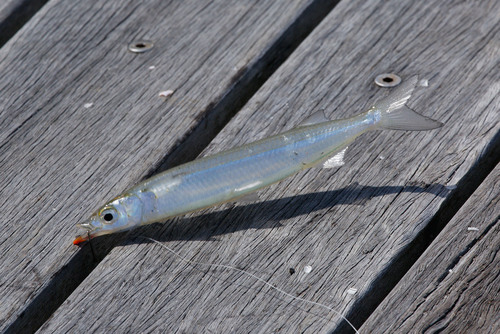
Snubnose Garfish
Arrhamphus sclerolepis
A shimmering surface-dweller of the Indo-Pacific, the Snubnose Garfish is a master of adaptation, equally at home in tropical mangroves and suburban backyard canals.
Quick Identification
Size
Typically 20–35 cm (8–14 inches) in length, reaching a maximum of approximately 40 cm (16 inches).
Colors
Bright shimmering silver body with a translucent quality; the dorsal surface is often a darker olive or bluish-green. A distinct silver lateral stripe runs the length of the body.
Key Features
- Lower jaw only slightly longer than the upper jaw
- Large and easily visible silver scales
- Streamlined, cigar-shaped body
- Dorsal and anal fins positioned far back toward the tail
When You’ll See Them
Geographic range
Where Does the Snubnose Garfish Live?
The Snubnose Garfish is native to the tropical and subtropical regions of the Indo-West Pacific, with its core populations concentrated around the northern half of Australia and Papua New Guinea. In Australia, they are found from the central coast of Western Australia, across the Northern Territory, and down the entire Queensland coastline into northern New South Wales. They are particularly abundant in the transition zones where freshwater rivers meet the sea, thriving in both pristine wild mangroves and developed suburban waterways.
Basemap © OpenStreetMap contributors
Behavior
The Snubnose Garfish is a highly social, surface-dwelling species that is typically found in schools ranging from a few individuals to dozens. They are remarkably versatile, moving easily between saltwater estuaries and freshwater river systems. They spend the vast majority of their time in the top 30 centimeters of the water column, where they use their specialized mouths to pick at floating debris, insects, and vegetation.
In urban environments, they have become quite bold and are frequently seen patrolling around boat ramps, jetties, and canal walls. When threatened by predators like larger fish or birds, they are known for their 'skipping' behavior—launching themselves out of the water and skittering across the surface at high speeds. While they are active during the day, they exhibit a distinct shift in feeding habits at night, often moving into very shallow water to graze.
EverydayEarth exclusive
Camera Tips
Capturing the Snubnose Garfish requires focusing on the 'surface zone' of the water. If you are using an underwater action camera, mount it on a weighted tripod or a jetty pylon just 10–15 cm (4–6 inches) below the surface, angling the lens slightly upward to catch the silver reflection of the fish against the sky. Because they are surface feeders, a camera placed too deep will only capture their silhouettes from below.
To attract them to your camera's field of view, use floating bait. In backyard canal settings, small pieces of bread or floating fish pellets work exceptionally well. For a more natural approach, look for spots where overhanging garden vegetation drops insects into the water; mounting a camera near these 'natural feeders' is a guaranteed way to see them in action during the daylight hours.
Nighttime recording offers a different perspective on their behavior. They are highly attracted to light, so a camera setup near a dock light or using a low-intensity underwater LED will draw them in. However, be careful with IR (infrared) flash settings—their scales are extremely reflective and can 'blow out' the image. Use the lowest flash intensity possible or offset the light source to the side of the camera lens.
Pay attention to the tides if you are in a coastal area. Snubnose Garfish often follow the rising tide into shallow mangroves or canal edges to feed on fresh algae and submerged terrestrial plants. Setting your camera to record during the two hours before and after high tide will significantly increase your chances of capturing a large, active school.
Similar Species
Species that look similar or are commonly confused with Snubnose Garfish.
Frequently Asked Questions
Record Snubnose Garfish at your habitat
Connect a camera to start building your own species record — AI identifies every visitor automatically.