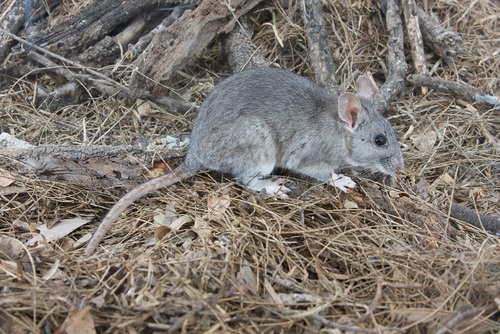
Southern Plains Woodrat
Neotoma micropus
The Southern Plains woodrat is a master architect of the desert, building formidable fortresses out of cactus and sticks. Known for their 'packrat' tendencies, these steely-gray rodents are a fascinating glimpse into the industrious life of the American Southwest.
Quick Identification
Size
Total length 12-16 inches (30-41 cm); tail length 5-7 inches (13-18 cm); weight 7-16 oz (200-450 g)
Colors
Steely gray or lead-colored upperparts; creamy white throat and belly; tail is dark gray above and white below.
Key Features
- Distinctive steely-gray fur coloration
- Short-haired, bicolored tail (not bushy)
- Large, thinly haired ears and dark eyes
- Large stick nests or 'middens' often built at the base of cacti
When You’ll See Them
Geographic range
Where Does the Southern Plains Woodrat Live?
Native to the central and southern regions of North America, the Southern Plains woodrat is a signature resident of the Great Plains and the Chihuahuan Desert. Its core range spans from southeastern Colorado and southwestern Kansas through Oklahoma and across the vast majority of Texas, reaching south into the northeastern states of Mexico. A specialized, pale-furred subspecies is uniquely found within the gypsum dunes of White Sands National Park in New Mexico.
Basemap © OpenStreetMap contributors
Behavior
The Southern Plains woodrat, often called the gray woodrat, is a solitary and industrious architect of the American Southwest. Unlike the common house rat, woodrats are native rodents known for their relatively clean habits and their obsession with building large, complex houses known as middens. These structures are constructed from sticks, dried dung, and particularly prickly pear cactus joints, which serve as a formidable defensive barrier against predators like coyotes and owls.
These woodrats are primarily nocturnal and highly territorial. A single midden is usually occupied by only one adult, except during the breeding season. They are also famous for their 'packrat' behavior—they are often attracted to shiny objects or human debris, which they will carry back to incorporate into their nests, sometimes dropping a previously held piece of cactus to 'trade' for a more interesting find.
EverydayEarth exclusive
Camera Tips
To capture high-quality footage of a Southern Plains woodrat, location is everything. Look for their tell-tale 'houses'—piles of sticks and cactus pads tucked into the base of a mesquite tree or a large prickly pear clump. Position your camera about 12-18 inches off the ground, aimed at the primary entrance of the midden or a well-worn trail leading away from it. Woodrats are creatures of habit and will use the same paths repeatedly.
Because they are strictly nocturnal, a camera with high-quality infrared (no-glow) LEDs is essential. Standard white flash may spook them and cause them to retreat into their fortresses for the rest of the night. If you want to encourage a 'photo op,' try placing a handful of pecans or sunflower seeds on a flat rock within the camera's field of view. Their natural curiosity can also be piqued by safe, shiny objects like a large metal washer or a silver spoon, which may result in a hilarious 'thievery' video.
Be mindful of the wind. Since these rats live in open plains and scrublands, tall grass moving in the breeze can trigger hundreds of 'false' videos. Set your camera sensitivity to medium and ensure the foreground is clear of swaying vegetation. In the winter, they remain active, so keep your batteries fresh; woodrats are one of the few desert species that will regularly provide action on your camera during the colder months.
Similar Species
Species that look similar or are commonly confused with Southern Plains Woodrat.
White-throated Woodrat
Smaller and more brownish-gray, with hairs on the throat that are white all the way to the base.
Eastern Woodrat
More brownish or cinnamon in color and typically found in more wooded or rocky environments further east.
Mexican Woodrat
Typically found at higher elevations in mountainous terrain with a more tawny-colored coat.
Frequently Asked Questions
Record Southern Plains Woodrat at your habitat
Connect a camera to start building your own species record — AI identifies every visitor automatically.