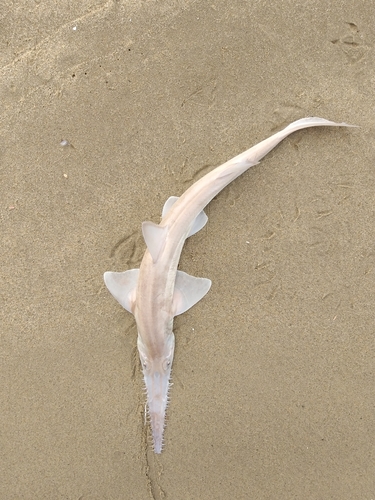
Southern Sawshark
Pristiophorus nudipinnis
A master of the seafloor, the Southern Sawshark uses its incredible toothy rostrum to navigate the dark depths of the Australian coast. This unique shark is a living testament to evolutionary specialization, blending perfectly into the silty shadows of the ocean floor.
Quick Identification
Size
Males reach around 110 cm (43 in) while females are larger, reaching 124 cm (49 in).
Colors
Uniform slate gray on the dorsal side with little to no distinctive markings; ventral side is a pale white or cream.
Key Features
- Elongated, saw-like rostrum with sharp lateral teeth
- Pair of sensitive barbels located halfway down the snout
- Five gill slits located on the sides of the head
- Two dorsal fins of nearly identical size
When You’ll See Them
Behavior
The Southern Sawshark is a specialized bottom-dweller that spends much of its time cruising the seafloor. Unlike many other shark species that rely on speed, this shark is a tactical hunter. It uses its highly sensitive rostrum, which is packed with electroreceptors, to detect the minute electrical impulses of prey hiding beneath the sand. When it locates a target, it uses its 'saw' in a rapid side-to-side thrashing motion to stun or impale small fish and invertebrates.
These sharks are generally solitary and non-aggressive toward humans, though their serrated snout can cause injury if they are handled or feel cornered. They are primarily active during the twilight and nighttime hours, moving from deeper shelf waters into shallower coastal bays to feed. While they are not known for long-distance migrations, they do follow seasonal temperature shifts in the southern Australian waters they call home.
EverydayEarth exclusive
Camera Tips
Capturing a Southern Sawshark on camera requires a specialized underwater setup, often referred to as a Baited Remote Underwater Video (BRUV) system. Since these sharks are benthic (bottom-dwelling), your camera must be weighted and positioned within 30 to 60 centimeters of the seafloor. A wide-angle lens is essential to capture the shark's full profile, as their elongated rostrum can often poke out of the frame if the camera is too close.
Bait is the most effective way to attract this species to your 'underwater backyard.' Use a mesh bait bag filled with oily fish like sardines or mackerel. The scent trail is vital because sawsharks rely heavily on their sense of smell and electroreception rather than sight to find food. Attach the bait bag to a pole extending about 1 meter in front of the lens to ensure the shark enters the focal zone while investigating the scent.
Because the Southern Sawshark is most active at night, your camera must have high-quality infrared (IR) capabilities or be paired with a low-intensity red light. White lights can sometimes spook deep-water species, so a red filter or dedicated IR LEDs will provide the best chance of witnessing natural hunting behavior. Ensure your camera is rated for depths of at least 20 to 50 meters if you are deploying it off a boat or a long pier.
Placement is everything. Look for transition zones where rocky reefs meet sandy plains; sawsharks love these 'edge' habitats where prey is abundant. In Southern Australia, late autumn and winter often see these sharks moving into slightly shallower reaches of bays, making this the peak time for shoreline-adjacent deployments. Always use a secondary tether or a buoy system to ensure you can recover your gear from the currents.
Similar Species
Species that look similar or are commonly confused with Southern Sawshark.
Frequently Asked Questions
Record Southern Sawshark at your habitat
Connect a camera to start building your own species record — AI identifies every visitor automatically.