Southern Tamandua
Tamandua tetradactyla
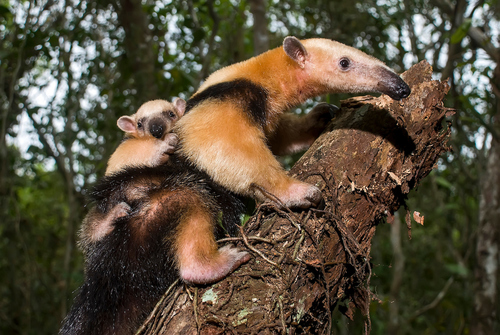
A charismatic climber with a distinctive black 'vest' and a powerful prehensile tail. The Southern Tamandua is South America's most stylish and specialized insect hunter.
Quick Identification
Size
Head-body length of 34–88 cm (13–35 in) with a prehensile tail of 37–67 cm (15–26 in); weight ranges from 1.5–8.4 kg (3.3–18.5 lb).
Colors
Typically golden-yellow to tan with a signature black 'vest' that covers the back and sides; some individuals in specific regions may be solid tan or black.
Key Features
- Striking black 'vest' pattern over a golden coat
- Strong, prehensile tail used as a fifth limb
- Powerful curved claws on the front feet
- Long, tapered snout with a 16-inch sticky tongue
When You’ll See Them
Behavior
The Southern Tamandua is a solitary wanderer that divides its time between the forest floor and the canopy. Unlike its larger cousin, the Giant Anteater, the tamandua is an adept climber, using its muscular prehensile tail to anchor itself while reaching for high-reaching insect nests. When threatened, they exhibit a unique defensive 'tripod' stance—standing on their hind legs and tail while spreading their claws in a wide embrace, looking much like they are offering a dangerous hug.
These mammals have a specialized lifestyle centered around their sensitive noses. They are constantly on the move, rarely spending more than a few minutes at a single ant or termite nest to avoid being swarmed by the insects' defensive bites. While generally shy and elusive, they are vital to their ecosystems, keeping wood-destroying insect populations in check.
EverydayEarth exclusive
Camera Tips
To capture high-quality footage of a Southern Tamandua, location is everything. Since they are semi-arboreal, you should look for 'wildlife highways'—sloping logs or low-hanging branches that bridge gaps between trees. Setting your camera about 2 to 3 feet off the ground along a well-used trail or at the base of a large, hollow tree is ideal. If you can locate an active termite mound or a dead log riddled with ant galleries, focus your lens there; tamanduas revisit these food sources frequently, though they never stay long.
Because tamanduas are primarily active at night, ensure your camera has a high-quality infrared flash that won't overexpose the subject at close range. Their golden fur can reflect a lot of light, so if your camera allows for adjustable flash intensity, set it to 'medium.' A fast trigger speed (under 0.5 seconds) is essential because while they look slow, their movements when tearing into a nest can be surprisingly rapid and jerky, which can lead to motion blur in slower cameras.
For the most engaging shots, aim for a side-profile or a slightly low angle. This helps highlight their distinctive 'vest' and the impressive length of their snout. If you are placing a camera in a backyard or garden, avoid using artificial lures or scents; tamanduas rely on their incredible sense of smell to find prey, and human-introduced scents can sometimes spook them. Instead, focus on preserving natural features like rotting wood or undisturbed leaf litter, which naturally attracts the insects they crave.
Seasonal timing isn't a major factor, but humidity often increases their activity. After a light rain, ants and termites are often more active near the surface of their nests, making it the perfect time for a tamandua to come out and forage. Check your camera cards more frequently during the wet season, as the increased insect activity often translates to more frequent visits from these 'collared' anteaters.
Similar Species
Species that look similar or are commonly confused with Southern Tamandua.
Frequently Asked Questions
Record Southern Tamandua at your habitat
Connect a camera to start building your own species record — AI identifies every visitor automatically.