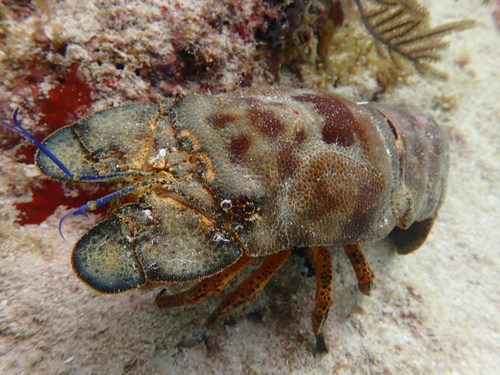
Spanish Lobster
Scyllarides aequinoctialis
A master of disguise on the Atlantic reef, the Spanish Lobster swaps traditional claws for incredible shovel-shaped antennae and heavy-duty armor.
Quick Identification
Size
Grows up to 12 inches (30 cm) in total length, with a carapace (body shell) typically measuring about 4.7 inches (12 cm).
Colors
Mottled reddish-brown, tan, or dull orange carapace with dark spots or purplish patches; legs and undersides are often paler or yellowish.
Key Features
- Wide, flattened shovel-like antennae instead of long whips
- Complete lack of large front claws or pincers
- Thick, pebble-textured carapace for camouflage
- Stocky, heavy-set body shape
- Small eyes tucked into deep protective sockets
When You’ll See Them
Behavior
The Spanish Lobster is a reclusive, slow-moving crustacean that spends the daylight hours tucked deep within the shadows of coral reefs, rocky ledges, or underwater caves. Unlike the more aggressive Spiny Lobster, the Spanish Lobster relies almost entirely on its superb camouflage and heavy armor for protection. When threatened, it clings tightly to the substrate, making it nearly impossible for predators to dislodge.
At night, these lobsters emerge to forage across the sandy seafloor and reef flats. They are surprisingly methodical hunters, using their specialized, flattened antennae to push through sediment or wedge themselves into tight spots. While they are generally solitary, they can occasionally be found sharing high-quality reef real estate with other slipper lobsters or even different species of reef fish during the day.
EverydayEarth exclusive
Camera Tips
Capturing the Spanish Lobster requires a specialized underwater trail camera or a standard camera in a waterproof housing. Since these creatures are strictly nocturnal and live in coastal marine environments, placement is everything. If you have a dock, sea wall, or access to a backyard canal in the Florida Keys or Caribbean, look for vertical structures with deep crevices or overhanging ledges. Mount your camera about 12 to 18 inches off the bottom, angled slightly downward toward a flat, sandy patch adjacent to a rocky hiding spot.
Because they are scavengers with a keen sense of smell, you can significantly increase your chances of a 'hit' by using a scent lure. A small, perforated PVC pipe filled with crushed clams or fish trimmings works wonders. Secure this 'bait station' about 3 feet in front of the lens. The Spanish Lobster is slow and deliberate, so set your camera to take short 15-second videos rather than still photos; this allows you to see their unique way of 'walking' on their tips and using their shovel-shaped antennae to investigate the bait.
Lighting is a critical factor for marine night photography. These lobsters are less likely to be spooked by infrared (black flash) than white light, but a low-intensity red light can also work well. Ensure your camera is secured to a weighted base or a permanent piling, as tidal currents and surge can easily shift the frame. In areas with high water clarity, the Spanish Lobster’s mottled shell provides excellent camouflage, so look for the movement of their thick legs or the distinctive glint of their eyes in your footage.
Finally, check your equipment for biofouling. If leaving a camera submerged for more than a few days, algae and barnacles will quickly cover the lens. If you are a coastal resident, try timing your 'deployments' with the new moon. The darker nights often trigger more daring foraging behavior, bringing the lobsters further out from their daytime dens and into the view of your camera lens.
Similar Species
Species that look similar or are commonly confused with Spanish Lobster.
Frequently Asked Questions
Record Spanish Lobster at your habitat
Connect a camera to start building your own species record — AI identifies every visitor automatically.