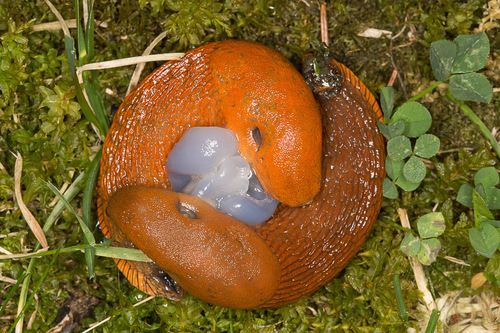
Spanish Slug
Arion vulgaris
The Spanish Slug is a resilient and fascinating wanderer of the night. Known for its vibrant colors and incredible appetite, this 'super-slug' offers a unique glimpse into the hidden world of backyard invertebrates.
Quick Identification
Size
7 to 15 cm (2.7 to 6 inches) in length; weighs approximately 10 to 30 grams (0.3 to 1 ounce).
Colors
Highly variable, ranging from bright orange and reddish-brown to dark brown or olive-green; usually solid in color as adults with a paler greyish foot.
Key Features
- Breathing hole (pneumostome) located on the front half of the mantle
- Large, robust body with coarse, granular skin texture
- Produces thick, sticky, yellowish-orange defensive slime
- Lacks a shell and has a rounded back when at rest
When You’ll See Them
Behavior
The Spanish Slug is widely regarded as one of the most successful and invasive gastropods in the world. Unlike many native species that shy away from human activity, the Spanish Slug thrives in gardens and agricultural settings. They are highly opportunistic and possess a voracious appetite that allows them to outcompete local slug populations. As hermaphrodites, they are incredibly prolific; a single individual can lay up to 400 eggs in a season, leading to sudden population explosions during wet years.
These slugs are primarily nocturnal, emerging from their damp hiding spots beneath logs, pots, or leaf litter as the sun sets. They use their specialized sensory tentacles to 'smell' out food sources from a distance. While they are often seen as pests due to their impact on garden plants, they play a complex role in the ecosystem by breaking down organic matter, though their tendency to eat almost anything—including animal feces and other slugs—sets them apart from more specialized feeders.
EverydayEarth exclusive
Camera Tips
To capture the slow-moving world of the Spanish Slug, you need to rethink your typical wildlife camera strategy. Because slugs do not trigger standard PIR (Passive Infrared) sensors effectively due to their cold-blooded nature, the most successful method is to use a camera with a 'Time Lapse' feature or a 'Close-Focus' lens. Set your camera to take a photo every 30 to 60 seconds during the night to document their movement patterns across your garden.
Placement is everything. Position your camera just 3 to 5 inches off the ground, angled slightly downward. Focus on a 'slime trail' highway or near damp hotspots like the base of a compost bin or under a leafy hosta plant. To draw them directly into your frame, place a 'lure' such as a shallow dish of beer or a few slices of cucumber. These scents are irresistible to Spanish Slugs and will keep them in the camera's field of view for an extended period.
Timing your recording with the weather will yield the best results. Plan your camera session for a night following a heavy rainstorm when the humidity is high. In dry conditions, the Spanish Slug will remain deep underground or tucked away in cool crevices to prevent desiccation. If your camera has a macro mode, use it to capture the incredible detail of their rippling 'foot' and the rhythmic opening and closing of their breathing hole.
Be mindful of the camera's safety; Spanish Slugs are curious and will often crawl directly over lenses or housings, leaving behind a thick, iridescent slime trail. Using a rain shield or a simple DIY housing can help keep your lens clear while you capture their nocturnal adventures.
Similar Species
Species that look similar or are commonly confused with Spanish Slug.
Frequently Asked Questions
Record Spanish Slug at your habitat
Connect a camera to start building your own species record — AI identifies every visitor automatically.