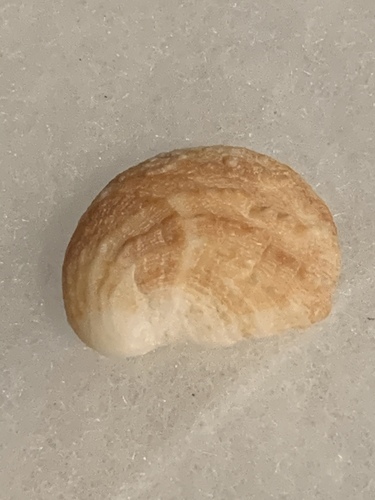
Spiny Slippersnail
Bostrycapulus aculeatus
The Spiny Slippersnail is a master of the intertidal zone, sporting a prickly suit of armor and a fascinating life story. Known for stacking themselves in towers, these snails are a testament to the strange and wonderful survival strategies of the sea.
Quick Identification
Size
10–30 mm (0.4–1.2 inches) in length; low-profile, oval shape
Colors
Dull brown, tan, or grayish-white shell; spines often accumulate greenish algae or silt
Key Features
- Prickly shell covered in irregular rows of short, hooked spines
- Internal horizontal shelf (septum) covering about half the opening
- Stacked growth pattern with smaller males atop larger females
When You’ll See Them
Geographic range
Where Does the Spiny Slippersnail Live?
Where Does the Spiny Slippersnail Live? This species is primarily native to the warm coastal waters of the Western Atlantic, ranging from the shores of North Carolina down through the Gulf of Mexico and the Caribbean to Brazil. While it thrives in tropical and subtropical climates, it has also become a globetrotter; introduced populations have been documented in Southern California and parts of Japan, likely spreading via the ballast water of ships or hitchhiking on commercial oyster shells.
Basemap © OpenStreetMap contributors
Behavior
As filter feeders, they spend most of their lives attached to a hard substrate. They use their specialized gills to pump seawater through their mantle cavity, trapping microscopic phytoplankton and organic debris. Unlike many other snails, they rarely move once they have found a suitable spot to settle, relying on their spiny armor to protect them from predators like crabs and small fish.
EverydayEarth exclusive
Camera Tips
Capturing the Spiny Slippersnail on an AI-powered camera requires a specialized approach since they live underwater. If you have a backyard dock or coastal property, use a waterproof action camera or a dedicated underwater housing. Mount the camera to a stationary object like a pier piling or a heavy rock in a shallow tide pool where these snails are known to congregate. Because they move so slowly, time-lapse mode is the most effective setting—try taking one photo every 60 seconds to see their subtle shifting and filter-feeding rhythms.
Lighting is often the biggest challenge underwater. Use an external, waterproof LED light source positioned at a 45-degree angle to the snail. This side-lighting will emphasize the shadows of the 'spines,' making the snail pop against the background rock. If your camera supports macro settings, get as close as possible; the intricate texture of the shell is its most beautiful feature and is easily lost in wide-angle shots.
Position your camera to capture the 'stacking' behavior. Look for clusters of snails rather than individuals. If you are filming in a tide pool, wait for the incoming tide; the rush of fresh, oxygenated water often triggers the snails to lift their shells slightly to feed, providing a rare glimpse of their soft body parts and the 'slipper' shelf inside. Ensure your camera is securely weighted with lead weights or sandbags to prevent the surf from moving your frame.
Similar Species
Species that look similar or are commonly confused with Spiny Slippersnail.
Frequently Asked Questions
Record Spiny Slippersnail at your habitat
Connect a camera to start building your own species record — AI identifies every visitor automatically.