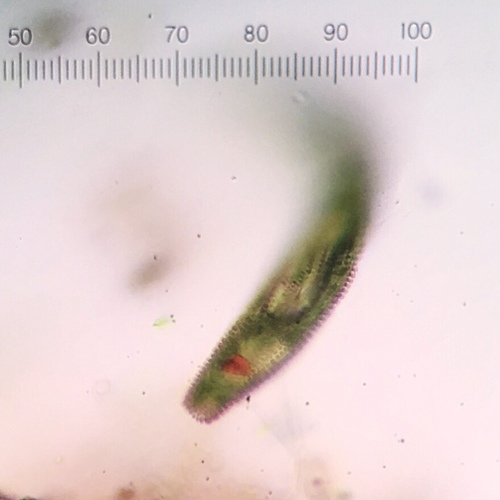
Spirogyra
Lepocinclis spirogyroides
A masterpiece of microscopic geometry, Lepocinclis spirogyroides is a spiraling, emerald-hued wonder that brings high-speed physics to the smallest drops of pond water.
Quick Identification
Size
50-100 micrometers (0.002-0.004 inches) in length
Colors
Vibrant emerald green chloroplasts with a translucent, golden-brown rigid outer shell
Key Features
- Spindle-shaped body with a distinct, pointed posterior tail
- Prominent spiral ridges (striae) winding around the body
- Two large, ring-shaped paramylon grains visible inside the cell
When You’ll See Them
Behavior
Lepocinclis spirogyroides is a fascinating single-celled organism known for its rigid, spiraling structure. Unlike its cousins in the Euglena genus, which are highly flexible and constantly change shape, Lepocinclis maintains a stiff, spindle-like form due to its hardened pellicle. It moves through the water using a single, long flagellum that acts like a whip, pulling the organism forward in a steady, rotating motion that resembles a tiny, living drill.
These organisms are highly sensitive to light (phototactic). In a backyard pond or birdbath, they will migrate toward the surface during the day to maximize photosynthesis and move deeper or under vegetation when the light becomes too intense. While they are solitary, they can reach incredible population densities in nutrient-rich water, creating a green hue on the water's surface that is often mistaken for simple algae.
EverydayEarth exclusive
Camera Tips
Capturing Lepocinclis spirogyroides requires a departure from standard trail cameras. To document this species, you should use a digital microscope camera or a high-magnification smartphone lens attachment. The best way to 'film' them in your backyard is to collect a water sample from the edge of a pond, specifically targeting areas with floating organic debris or a slight green tint. Use a pipette to place a single drop on a concave slide, which allows the organism room to swim freely without being crushed.
For the best visual results, utilize 'darkfield' illumination if your camera setup allows it. This technique lights the specimen from the side against a dark background, making the intricate spiral ridges and the internal green chloroplasts of Lepocinclis glow brilliantly. Because they are phototactic, you can actually lead them across your camera's field of view by slowly moving a small flashlight near the slide, encouraging them to swim toward the light source.
If you are using an automated micro-camera setup near a pond, position the intake tube near the surface during the brightest part of the day. High-definition video is preferable to still photos, as the characteristic 'corkscrew' swimming motion is the most reliable way to identify this species from other similar euglenoids. Settings should be adjusted for high shutter speeds to compensate for the rapid vibration of the flagellum and the constant rotation of the cell body.
Similar Species
Species that look similar or are commonly confused with Spirogyra.
Frequently Asked Questions
Record Spirogyra at your habitat
Connect a camera to start building your own species record — AI identifies every visitor automatically.