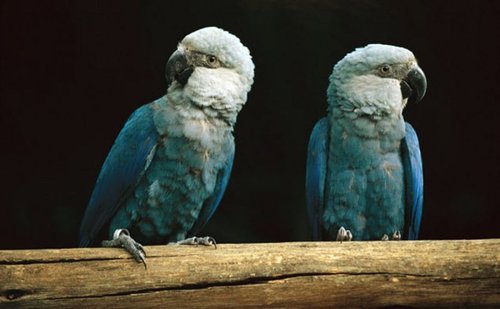
Spix's Macaw
Cyanopsitta spixii
The Spix's Macaw is a symbol of hope and persistence, recently returned to the Brazilian wild after being extinct in the forest for over two decades. With its stunning gradient of blues and soulful expression, this 'little blue macaw' is one of the rarest sights in the avian world.
Quick Identification
Size
Length: 55–57 cm (21.5–22.5 in); Wingspan: approx. 60–70 cm (24–28 in); Weight: 300–400 g (10.5–14 oz)
Colors
Various shades of blue; pale blue-grey head, darker cobalt wings and tail, with black facial skin (lores)
Key Features
- Distinctive pale greyish-blue head and neck
- Vibrant cobalt blue wings and long, slender tail
- Bare black skin patches between the eye and beak
- Relatively small and delicate build compared to other macaws
When You’ll See Them
Behavior
The Spix’s Macaw, famously known as the 'Little Blue Macaw,' is a highly social and intelligent bird that thrives on interaction. Historically, these parrots lived in small family groups or pairs, rarely seen alone unless searching for a mate. They are known for their loud, raspy vocalizations that echo through the gallery forests of the Brazilian Caatinga, using these calls to maintain contact with their flock while foraging or flying.
In the wild, they exhibit a fascinating 'sentinel' behavior. While the group feeds on seeds or nuts, at least one bird remains perched high in a Caraiba tree to watch for potential predators, sounding a sharp alarm if danger approaches. Their recent reintroduction has shown them to be resilient and adaptive, slowly relearning the migratory and foraging patterns that were nearly lost during their time in captivity.
EverydayEarth exclusive
Camera Tips
Capturing a Spix’s Macaw on camera requires a strategic approach focused on their specific habitat requirements. Because these birds are part of a highly managed reintroduction program, the best locations for camera placement are near known 'soft-release' sites or established watering holes. If you are in the Curaçá region, aim your camera at the canopy of Caraiba trees, which serve as their primary nesting and roosting spots. Mount your camera at a slight downward angle from a neighboring branch or use a high-reach pole to get a clear view of their flight paths.
For those looking to document ground-level behavior, focus on water troughs or natural depressions where rainwater collects. Spix's Macaws are most vulnerable when drinking, so they prefer spots with nearby cover. Set your AI-powered camera to 'Burst Mode' or high-speed video. These birds are incredibly fast flyers, and a standard single-shot trigger might only capture a blue blur. A trigger speed of 0.2 seconds or faster is highly recommended to catch the detail of their feathers mid-flight.
Lighting in the Brazilian Caatinga can be harsh and overblown during midday. To get the best color representation of their unique cerulean plumage, ensure your camera is active during the 'golden hours' of dawn and dusk. Use a polarizing filter if possible to reduce the glare from the waxy leaves of the Faveleira trees. If you are using a bait or lure, stick to the natural: planting native Pinhão or Faveleira trees in your viewing area is the only ethical way to attract them, as artificial feeders can disrupt their re-adaptation to the wild.
Finally, consider the seasonal movements. During the rainy season (November to March), the birds are more localized around nesting hollows. During the dry season, they may travel further for food. If your camera supports time-lapse, set it to capture a frame every 5 minutes during the morning peak hours; this can help you identify their preferred flight corridors before you commit to a permanent high-speed video setup.
Similar Species
Species that look similar or are commonly confused with Spix's Macaw.
Frequently Asked Questions
Record Spix's Macaw at your habitat
Connect a camera to start building your own species record — AI identifies every visitor automatically.