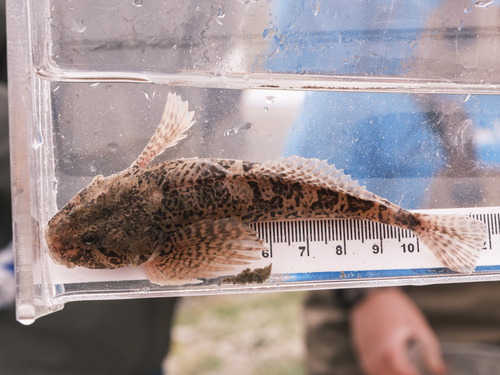
Spoonhead Sculpin
Cottus ricei
The Spoonhead Sculpin is a master of the northern depths, sporting a uniquely flattened head and a coat of sharp prickles. This secretive bottom-dweller is a ghost of the Great Lakes and Arctic drainages, rarely seen but vital to the underwater ecosystem.
Quick Identification
Size
6 to 10 cm (2.4 to 4 inches) on average; maximum length up to 13.5 cm (5.3 inches).
Colors
Olive-brown to tan upper body with dark mottling; 2 to 4 dark 'saddle' bands across the back; white or pale cream belly.
Key Features
- Broad, flat 'spoon-shaped' head
- Skin covered in small, sharp prickles giving a sandpaper-like texture
- Large, fan-shaped pectoral fins used for stabilizing on the bottom
- Long, curved preopercular spine on the gill cover
When You’ll See Them
Geographic range
Where Does the Spoonhead Sculpin Live?
Native to the northern regions of North America, the Spoonhead Sculpin occupies a vast territory stretching from the Great Lakes and St. Lawrence River basin across the Canadian interior to the Arctic Ocean drainage. It is found predominantly throughout Canada—from Quebec to the Yukon—and extends into the northern United States, particularly within the deep basins of Lake Superior and Lake Michigan. Unlike many other sculpins, it thrives in the silty, high-turbidity waters of large northern river systems.
Basemap © OpenStreetMap contributors
Behavior
The Spoonhead Sculpin is a reclusive, bottom-dwelling fish that spends most of its life tucked away in the shadows of cold, deep waters. Unlike many fish that swim in the water column, sculpins lack a swim bladder, meaning they spend their time resting directly on the substrate. They are masters of camouflage, using their mottled coloration to blend seamlessly with sand, gravel, and silt.
These fish are generally solitary and are most active during the low-light hours of dawn and dusk. In large lake systems, they may migrate to shallower waters during the autumn and winter months to spawn, making them more accessible to observers. While they are not social in the traditional sense, they are vital indicators of ecosystem health, as they are sensitive to water pollution and rising temperatures.
EverydayEarth exclusive
Camera Tips
Capturing the Spoonhead Sculpin requires a dedicated underwater camera setup, preferably one with high-definition video capabilities and low-light sensors. For those with backyard stream access, place your camera in a waterproof housing and secure it to a heavy baseplate or a weighted tripod. Position the lens just a few inches above the substrate, angled slightly downward at 30 to 45 degrees to capture the fish as it rests on the sand or gravel.
Because these fish are crepuscular and often inhabit murky or deep water, infrared (IR) lighting is essential. To avoid the 'snowstorm' effect caused by backscatter (light reflecting off suspended silt), try to position an external IR light source a few inches to the side of the camera rather than using the light built directly into the lens housing. This creates shadows that better define the sculpin’s unique 'spoon' head shape against the bottom.
While they are shy, you can entice them into the camera's field of view using a scent-based lure. A small mesh bag filled with crushed aquatic invertebrates or fish roe, placed just upstream of the camera, can draw them out from under rocks. Set your camera to record short, high-frame-rate clips rather than long videos to capture their sudden, darting movements across the bottom.
Seasonality is key for shallow-water observation. During the summer, these fish move into deeper, cooler water where they are difficult to reach. Aim to deploy your camera in late autumn or early winter when they move toward the margins of large rivers or lake shores to spawn. Ensure your gear is rated for freezing temperatures if you are operating in northern climates during this peak activity period.
Similar Species
Species that look similar or are commonly confused with Spoonhead Sculpin.
Frequently Asked Questions
Record Spoonhead Sculpin at your habitat
Connect a camera to start building your own species record — AI identifies every visitor automatically.