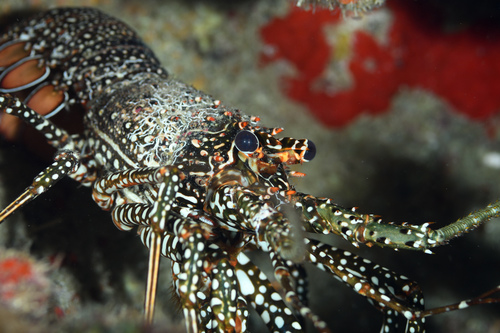
Spotted Spiny Lobster
Panulirus guttatus
A nocturnal jewel of the Caribbean reefs, the Spotted Spiny Lobster transforms the dark seafloor into a theater of intricate patterns and cautious movement. With its star-dusted carapace and elegant antennae, this elusive crustacean is a prized find for any underwater camera enthusiast.
Quick Identification
Size
Typically 15-20 cm (6-8 inches) in length; weighs approximately 0.2-0.5 kg (0.5-1.1 lbs)
Colors
Dark purplish-brown or greenish-black base color covered in a dense pattern of small, brilliant white circular spots; legs are similarly spotted with hints of longitudinal striping.
Key Features
- Covered in distinct white circular spots over a dark body
- Lacks large front pinching claws
- Two pairs of long, thick, spiny antennae
- Compact, cylindrical body shape specialized for reef crevices
When You’ll See Them
Behavior
The Spotted Spiny Lobster is a reclusive, nocturnal inhabitant of the tropical reef. Unlike its larger cousin, the Caribbean Spiny Lobster, this species is relatively solitary and does not participate in the famous long-distance 'lobster marches.' During the daylight hours, they are almost never seen in the open, preferring to wedge themselves deep into the dark recesses of rocky ledges, coral caves, or under stony outcroppings.
As night falls, these lobsters emerge to forage across the reef flats and seagrass beds. They are cautious movers, using their long antennae to sense predators and navigate the complex topography of the seafloor. While they generally ignore humans, they are quick to retreat backward into a hole using a powerful flip of their muscular tail if they feel threatened by a diver or a bright camera flash.
EverydayEarth exclusive
Camera Tips
Capturing the Spotted Spiny Lobster requires an underwater camera setup, such as a waterproof action camera or a specialized dock-mounted reef cam. Because these lobsters are strictly nocturnal and sensitive to light, the best results come from cameras with high-quality infrared (IR) or low-glow night vision. Standard white light flashes often startle them, causing a rapid 'tail-flip' escape that leaves you with nothing but a cloud of silt in the frame. Position your camera at the mouth of a known 'lobster hole'—look for long antennae poking out from under rocky ledges during the day to identify a prime location.
Placement is everything for this species. Set your camera low, ideally just a few inches off the sandy bottom, angled slightly upward toward a rocky overhang. This 'worm's-eye view' captures the intricate spotting on their legs and the underside of their carapace. If you are using a camera mounted to a dock or pier, look for areas with heavy barnacle growth or rock rip-rap, as these serve as the lobster's version of a suburban backyard. Ensure the camera is secured tightly; surge and tidal currents can easily shift your equipment and ruin your framing.
To attract a Spotted Spiny Lobster into the field of view, you can use a scent-based lure. A perforated PVC tube filled with crushed clams or oily fish (like mackerel) works wonders. Secure the bait tube directly in front of the lens. The lobster's keen chemoreceptors will pick up the scent from down-current, and you will often record them spending several minutes trying to pick at the tube with their small walking legs. This provides excellent, long-duration footage of their feeding behavior and social interactions with other reef scavengers like crabs and eels.
Similar Species
Species that look similar or are commonly confused with Spotted Spiny Lobster.
Frequently Asked Questions
Record Spotted Spiny Lobster at your habitat
Connect a camera to start building your own species record — AI identifies every visitor automatically.