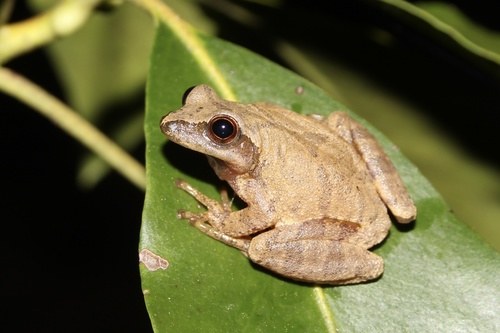
Spring Peeper
Pseudacris crucifer
A tiny titan of the wetlands, the Spring Peeper announces the end of winter with its iconic, high-pitched whistle and unmistakable cross-marked back.
Quick Identification
Size
0.75 to 1.25 inches (1.9 to 3.2 cm) in length; weight is typically less than 0.15 ounces (4 grams)
Colors
Shades of tan, brown, or olive-grey; distinguished by a dark, irregular 'X' or cross-shaped marking on the back. Males have a dark, expandable vocal sac at the throat.
Key Features
- Dark 'X' marking on the dorsal side
- Small adhesive toe pads for climbing
- High-pitched, bird-like whistling call
- Tan or brown skin with cream-colored underside
When You’ll See Them
Behavior
The Spring Peeper is best known as the loud, whistling herald of the changing seasons. Despite their small size, a chorus of these frogs can be heard from over a mile away during the breeding season. They are primarily nocturnal, spending their days hiding under leaf litter or low-hanging vegetation to maintain moisture. While they are technically 'tree frogs' and possess adhesive toe pads, they are most often found on the ground or in low shrubs rather than high in the canopy.
During the winter, Spring Peepers perform a remarkable feat of survival. As the temperature drops, their livers produce massive amounts of glucose which acts as a natural anti-freeze in their bloodstream. This allows them to partially freeze—with their heart even stopping for a period—only to 'thaw out' and begin calling as soon as the first warm rains of late winter or early spring arrive.
EverydayEarth exclusive
Camera Tips
Capturing a Spring Peeper on camera requires a specialized approach due to their diminutive size. Positioning is everything; place your camera just a few inches off the ground near the edge of a pond or a damp, low-lying area of your yard. If your camera has a macro lens or a close-focus setting, ensure it is engaged, as these frogs are often less than an inch long and will appear as a blur if the camera is set to a standard focus range.
Because amphibians are cold-blooded, traditional Passive Infrared (PIR) sensors—which detect heat signatures—often fail to trigger. To overcome this, set your camera to 'Time-Lapse' mode during the evening hours or use the highest sensitivity setting for motion detection. If you are using a trigger-based system, placing the camera near a light source that attracts insects can increase your chances, as the frog will eventually move into the frame to hunt.
Lighting is another hurdle. Standard infrared flashes can sometimes 'wash out' the delicate markings on a frog's skin at close range. If your camera allows for adjustable flash power, turn it down. Alternatively, placing a piece of semi-transparent tape over a portion of the IR flash can help diffuse the light, resulting in a clearer image of the 'X' pattern on their back. For the best results, aim for humid, rainy nights when temperatures are above 45°F (7°C).
Similar Species
Species that look similar or are commonly confused with Spring Peeper.
Frequently Asked Questions
Record Spring Peeper at your habitat
Connect a camera to start building your own species record — AI identifies every visitor automatically.