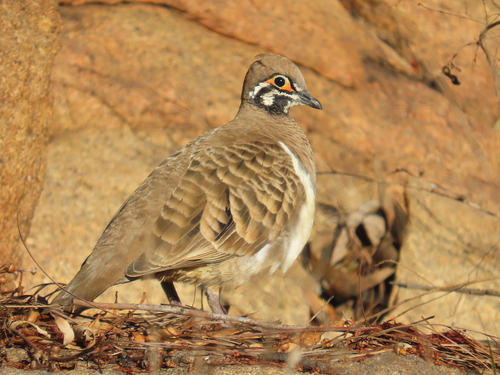
Squatter Pigeon
Geophaps scripta
Meet the 'scribble-faced' ground dweller of the Australian bush. Famous for their calm nature and striking facial patterns, Squatter Pigeons are a charming addition to any backyard camera feed.
Quick Identification
Size
26–32 cm (10–12.5 inches) in length; weighs between 145–250g (5–9 oz).
Colors
Sandy-brown upperparts and a light grey breast; face features a bold black-and-white 'scribbled' pattern; white belly and a distinct white stripe on the lower flanks.
Key Features
- Striking black-and-white patterned face
- Characteristic 'squatting' posture when approached
- Large white V-shaped stripe along the side of the body
- Noisy, flickering wing-beats during low-altitude flight
When You’ll See Them
Behavior
The Squatter Pigeon is famously bold, often preferring to 'squat' motionless or walk away calmly rather than taking flight when humans or predators approach. This unique defense mechanism, relying on their earthy camouflage, is how they earned their common name. They are highly social birds, usually seen in pairs or small family groups of up to 15 individuals, though larger congregations can occur near water sources during particularly dry spells.
These pigeons are ground-dwellers through and through. They forage, nest, and even spend much of their resting time on the soil, often seen dust-bathing in open patches of dirt. When they do eventually fly, it is usually a short, low burst with noisy, whistling wing-beats, settling back to the ground as soon as they feel they have reached a safe distance. Their calm demeanor and predictable paths make them a delight to observe if you move slowly and quietly.
EverydayEarth exclusive
Camera Tips
Since Squatter Pigeons are strictly ground-foraging birds, camera placement is the most critical factor for a great shot. Position your AI-powered camera very low to the ground—no higher than 20–30 centimeters (8–12 inches). Angling the camera level with the ground will capture their intricate facial markings and the unique 'squatting' behavior at their eye level, creating a much more intimate portrait than an overhead shot.
For baiting, these birds are highly attracted to small grains and wild birdseed mixes spread directly on patches of bare earth. Unlike many other backyard birds, they are hesitant to use raised feeders, so keep the 'stage' natural and clear of tall grass. Clearing a small 1-meter circle of vegetation will not only attract them for dust-bathing but also prevent 'false triggers' from wind-blown grass and ensure the AI can clearly identify the bird's markings.
Water is the ultimate lure for this species. Placing your camera near a ground-level birdbath or a shallow dish of water in a dry area will guarantee frequent visits. During the peak of summer, they will visit these water sources reliably every morning. Because they often travel in groups, set your camera to 'Burst Mode' or record short 15-second video clips. This allows you to capture their social interactions, such as the gentle head-bobbing and the way they huddle together when resting.
Similar Species
Species that look similar or are commonly confused with Squatter Pigeon.
Frequently Asked Questions
Record Squatter Pigeon at your habitat
Connect a camera to start building your own species record — AI identifies every visitor automatically.