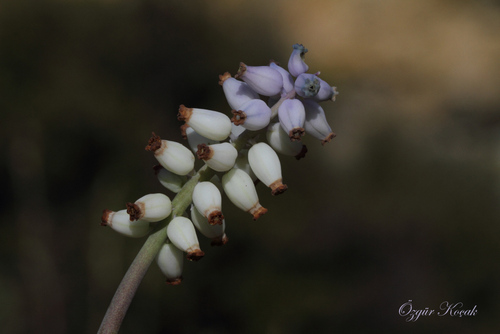
starch grape-hyacinth
Muscari racemosum
A fragrant spring jewel originally from the rocky slopes of Turkey, the starch grape-hyacinth is prized for its musky scent and unique color-changing blooms.
Quick Identification
Size
Stands 10-20 cm (4-8 inches) tall with a flower spike of 2-5 cm (1-2 inches).
Colors
Flowers begin as greyish-blue or purple buds, maturing into creamy white or pale yellowish-green bells.
Key Features
- Distinct urn-shaped nodding flowers
- Intense musk or 'starch' fragrance
- Fleshy, narrow, grey-green leaves
- Dense flower raceme on a leafless stem
When You’ll See Them
Geographic range
Where Does the starch grape-hyacinth Live?
Native to the sun-drenched, rocky landscapes of southwest Turkey, the starch grape-hyacinth is a specialist of Mediterranean mountain climates. Within its core range, it is found clinging to limestone outcrops and alpine scree. Beyond its native borders, it has been introduced to temperate regions across Europe and North America, where it is a cherished, though less common, ornamental resident of rock gardens and botanical collections.
Basemap © OpenStreetMap contributors
Behavior
The starch grape-hyacinth is a perennial bulbous plant that signals the arrival of spring. Unlike many of its cousins that spread aggressively, this species is more reserved, growing in tidy clumps and focusing its energy on producing a heavy, sweet-yet-earthy fragrance that some liken to wet starch or musk. This scent is a primary attractant for early-season pollinators like solitary bees and honeybees.
As an ephemeral species, its lifecycle is quick. It emerges rapidly after the first spring thaw, blooms for a few weeks, and then its foliage dies back completely by mid-summer. During its dormant phase, the plant survives as a small underground bulb, protected from the heat and drought of its native rocky habitats. It is a hardy survivor, capable of thriving in nutrient-poor soils as long as it has excellent drainage.
EverydayEarth exclusive
Camera Tips
To capture the starch grape-hyacinth effectively, you should set your camera to 'Time-Lapse' mode. Because this plant grows and blooms relatively slowly, a photo taken every 2 to 4 hours over a two-week period in early spring will create a stunning video of the 'raceme' (flower spike) stretching upward and the individual bells opening from the bottom to the top.
Position your camera low to the ground, ideally on a mini-tripod or a ground-level stake, roughly 12 to 18 inches away from the plant. This 'worm's eye view' emphasizes the architectural beauty of the flower bells. If your camera has a macro lens or a close-focus setting, use it to capture the subtle color transition from blue-purple buds to creamy white flowers.
Since this plant is a magnet for early spring insects, use a motion-trigger setting during the sunniest part of the day (10 AM to 2 PM). This is when the scent is strongest and you are most likely to film pollinators like queen bumblebees or hoverflies visiting the flowers. Ensure the area around the base of the plant is cleared of tall grass so the motion sensor isn't triggered by wind-blown blades.
Similar Species
Species that look similar or are commonly confused with starch grape-hyacinth.
Common Grape Hyacinth
Much brighter cobalt blue throughout; lacks the intense musky scent and the yellowish-white mature flowers of the starch variety.
Tassel Hyacinth
Much taller with a 'tuft' of violet sterile flowers at the top, looking more like a miniature feather duster than a tight cluster of bells.
Frequently Asked Questions
Record starch grape-hyacinth at your habitat
Connect a camera to start building your own species record — AI identifies every visitor automatically.