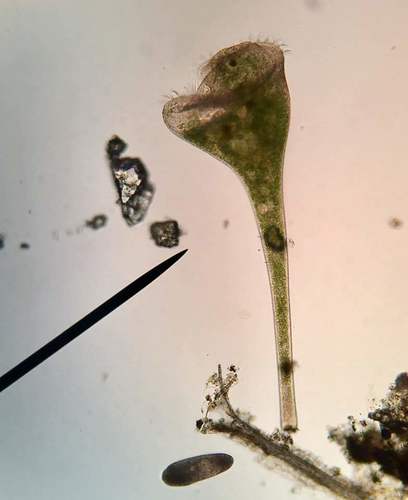
Stentor polymorphus
Stentor polymorphus
A microscopic marvel of your backyard pond, Stentor polymorphus is a trumpet-shaped giant that lives in harmony with green algae. It is one of the few single-celled creatures large enough to be seen as a dancing green speck in still water.
Quick Identification
Size
1 to 2 mm (0.04 to 0.08 inches) in length; one of the few single-celled organisms visible to the naked eye
Colors
Vibrant emerald green due to symbiotic algae; can appear translucent or white if algae are absent
Key Features
- Distinct trumpet or horn-shaped body when extended
- Bright green coloration from symbiotic zoochlorellae algae
- Rapidly contracts into a ball when disturbed
- Visible wreath of beating cilia around the wide 'mouth' end
When You’ll See Them
Behavior
Stentor polymorphus is a fascinating giant of the microscopic world, often found anchored to submerged surfaces in backyard ponds. When undisturbed, it extends its body into a majestic trumpet shape, using a crown of rapidly beating cilia to create a miniature vortex in the water. This suction pulls in bacteria and smaller protists, which are then digested within its complex cellular structure. Despite being a single cell, it displays surprisingly sophisticated reactions to its environment, such as moving away from harsh light or contracting instantly into a tiny blob if it senses a physical vibration.
This species is well-known for its symbiotic relationship with green algae known as Chlorella. These algae live inside the Stentor's body, where they perform photosynthesis to provide the host with oxygen and supplementary nutrients. In exchange, the Stentor provides the algae with protection and a steady supply of carbon dioxide. This partnership is what gives the Stentor polymorphus its signature brilliant green color, making it look like a tiny, living emerald underwater.
EverydayEarth exclusive
Camera Tips
Capturing Stentor polymorphus on camera requires a departure from standard trail cam setups. Because these organisms are at the limit of human vision, you will need to utilize a digital microscope camera or a smartphone equipped with a high-powered macro lens (15x magnification or higher). To find them, collect a sample of 'pond muck'—the film found on the underside of lily pads or decaying submerged sticks. Look for tiny, bright green specks that look like dust; these are likely your subjects.
Place your water sample in a shallow glass petri dish or on a concave slide. The key to a great shot is lighting. Use 'darkfield' lighting if your equipment allows, which illuminates the subject from the side against a dark background. This makes the translucent body of the Stentor glow and highlights the movement of the cilia around the rim. If you are using a standard backyard AI camera with a macro attachment, ensure the water is perfectly still, as any vibration will cause the Stentor to contract into a nondescript ball.
Set your camera to a high frame rate (60fps or higher) to capture the fluid, vortex-like movement of the cilia. Since Stentor polymorphus is sensitive to light, they may move or contract if the light source is too hot or bright; use cool LED lighting and allow the organism about five minutes to 'relax' and extend into its trumpet shape before you begin recording. If you are lucky, you might even capture the moment a Stentor detaches its 'foot' and swims through the water column using its body cilia, a rare and highly dynamic behavior to document.
Similar Species
Species that look similar or are commonly confused with Stentor polymorphus.
Frequently Asked Questions
Record Stentor polymorphus at your habitat
Connect a camera to start building your own species record — AI identifies every visitor automatically.