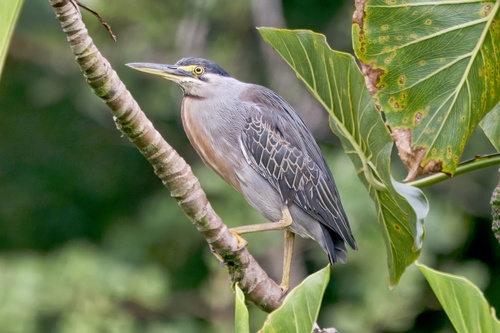
Striated Heron
Butorides striata
Meet the 'Bait-Fisher' of the bird world. The Striated Heron is a small, stealthy predator that uses clever lures to catch its prey, making it one of the most fascinating visitors to any backyard pond.
Quick Identification
Size
Length: 35–48 cm (14–19 in); Wingspan: 52–60 cm (20–24 in); Weight: 135–250 g (4.8–8.8 oz)
Colors
Adults feature a blue-grey back and wings, white or buff underparts with rufous streaking on the neck, and a glossy black cap. Legs are typically yellow, turning bright orange during the breeding season.
Key Features
- Glossy black cap with a small crest
- Yellow to orange legs and feet
- Dagger-like black bill with a yellow base
- Crouched, horizontal hunting posture
When You’ll See Them
Behavior
The Striated Heron is a master of patience and stealth. Unlike larger egrets that might wade through the shallows, this small heron typically stands motionless on a low-hanging branch or a rock, waiting for prey to swim within reach. They are largely solitary birds and can be quite territorial over their favorite fishing spots, often giving a sharp, squawking call if disturbed.
One of the most remarkable behaviors of the Striated Heron is its use of tools. It is one of the few bird species known to practice 'bait-fishing.' They have been documented dropping insects, feathers, or even small berries onto the water's surface to lure curious fish. When the fish approaches the 'bait,' the heron strikes with lightning speed.
EverydayEarth exclusive
Camera Tips
Capturing the Striated Heron on camera requires an understanding of their 'low and slow' lifestyle. Unlike many birds that visit feeders, these herons stay close to the water's edge. Position your camera very low—ideally just 12 to 24 inches off the ground—near the edge of a pond or stream. Aim the lens at a flat 'hunting platform' like a partially submerged log or a large stone, as these are the bird's preferred standing spots.
Because the Striated Heron can remain perfectly still for ten minutes or more, PIR (Passive Infrared) sensors can sometimes be tricked into thinking the 'subject' has left. Set your camera to a high sensitivity and use a short trigger interval. Video mode is highly recommended for this species; a 20-30 second clip is much more likely to capture their sudden, explosive strike or their fascinating bait-fishing behavior than a single still photo would.
Lighting is your best friend. These birds love the shade of overhanging branches, which can make for dark photos. If possible, angle your camera to take advantage of the morning sun reflecting off the water, which can provide a beautiful 'fill light' for the heron's underparts. If you are monitoring a backyard pond, placing the camera near a patch of reeds or lilies will increase your chances, as they use this vegetation for camouflage. Avoid using loud mechanical shutters if possible, as their hearing is acute and they are easily spooked in quiet suburban settings.
Similar Species
Species that look similar or are commonly confused with Striated Heron.
Frequently Asked Questions
Record Striated Heron at your habitat
Connect a camera to start building your own species record — AI identifies every visitor automatically.