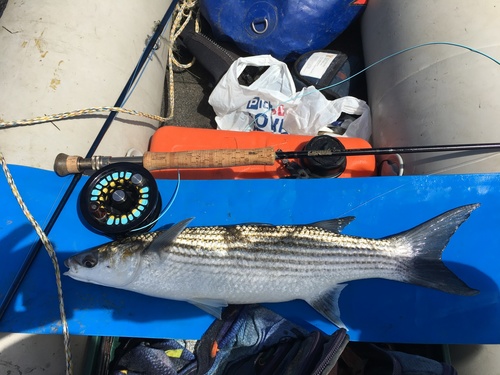
Striped Mullet
Chelon tricuspidens
An iconic resident of South Africa's muddy estuaries, the Striped Mullet is a silver-scaled acrobat known for its social schooling and impressive leaps. Watch them graze the coastal shallows where river meets sea.
Quick Identification
Size
Typically 40-60 cm (16-24 inches), reaching a maximum of 75 cm (30 inches); weight ranges from 1-4 kg (2.2-8.8 lbs).
Colors
Silvery-grey body with a darker olive-green or blue-grey back; 7 to 8 distinct dark horizontal stripes along the sides; silver-white belly.
Key Features
- 7-8 dark longitudinal stripes along the flanks
- Distinctive tricuspid (three-pointed) teeth used for grazing
- Broad, flattened head with a small, terminal mouth
- Deeply forked tail fin for powerful swimming
When You’ll See Them
Geographic range
Where Does the Striped Mullet Live?
Native to the southeastern coast of Africa, the Striped Mullet is a regional specialist found almost exclusively along the South African coastline. Its core range extends from Mossel Bay in the Western Cape eastward to the Kosi Estuary in KwaZulu-Natal. It is a strictly coastal and estuarine inhabitant, thriving in the subtropical waters where river systems meet the Indian Ocean.
Basemap © OpenStreetMap contributors
Behavior
The Striped Mullet is a highly social species, typically found in large schools that move rhythmically through estuarine waters. They are primarily bottom-feeders, often seen tilting their bodies at an angle to scrape algae and organic detritus from the muddy floor. This species is known for its remarkable agility and is frequently observed jumping out of the water, a behavior thought to help clear their gills or escape predators.
In South African estuaries, they serve as a vital link in the food chain. While they are generally wary of humans, they can become accustomed to activity in busy waterways. They are most active during the day, particularly during rising tides when they move into shallower mudflats to feed on newly submerged nutrients.
EverydayEarth exclusive
Camera Tips
To capture the Striped Mullet on camera, you will need a waterproof action camera or an underwater housing. For the best results in their natural habitat, mount your camera on a weighted base or a short, heavy tripod and place it directly on the muddy floor of a shallow estuary during low tide. As the tide comes in, the school will move over the camera to feed. Position the lens at a slight upward angle to capture the silvery reflections of their scales against the sunlight filtering through the surface.
Visibility is the biggest challenge in muddy estuaries. To get the clearest footage, wait for a period of calm weather when the sediment has settled, or aim to film during "slack water"—the brief window when the tide is neither coming in nor going out. Avoid placing the camera near heavy current, as this will stir up silt and obscure your view. If the water is particularly murky, keep the camera very close (within 30 cm) to your bait or point of interest.
You can encourage a school to congregate in front of your lens by using a small mesh bag filled with "chum," such as a mixture of breadcrumbs, flour, and a dash of fish oil. Secure the bag to a stake in the mud just out of the frame. The mullet will be drawn to the scent and the cloud of particles, providing excellent close-up opportunities of their unique feeding mechanics and tricuspid teeth.
Setting your camera to a high frame rate (60fps or 120fps) is highly recommended. These fish move with sudden, jerky bursts of speed, and high-speed recording will allow you to watch their social interactions and jumping behavior in smooth slow motion. Early morning or late afternoon sun provides the best horizontal light to illuminate the dark stripes along their silver bodies.
Similar Species
Species that look similar or are commonly confused with Striped Mullet.
Frequently Asked Questions
Record Striped Mullet at your habitat
Connect a camera to start building your own species record — AI identifies every visitor automatically.