Striped Skunk
Mephitis mephitis
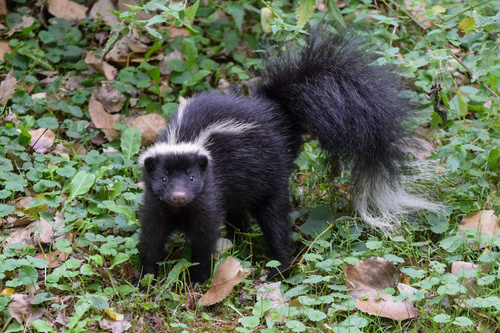
The Striped Skunk is the most famous night-owl of the neighborhood. Recognizable by its iconic 'V' stripe and bushy tail, this gentle insect-eater is a fascinating visitor to any backyard camera.
Quick Identification
Size
20-31 inches (52-80 cm) in length; 1.5-13 lbs (0.7-6 kg)
Colors
Jet black fur with a prominent white stripe starting at the head, splitting into a 'V' shape down the back; thin white blaze on the snout
Key Features
- Distinctive V-shaped white stripes on back
- Long, bushy black and white tail
- Small, triangular head with a thin white forehead line
- Robust claws adapted for digging
When You’ll See Them
Sightings on EverydayEarth
Jun 1, 2026
A striped skunk walks across the clearing in the pre-dawn darkness. It moves with a steady, low-slung gait from the center toward the left side of the frame before disappearing into the shadows.
Behavior
Striped Skunks are primarily solitary, mild-mannered mammals that prefer to avoid conflict. While they are famous for their potent defensive spray, they typically use it as a last resort, first giving warning signs like stomping their front feet, arching their backs, and hissing. They are incredibly adaptable to human presence, often making their dens under porches, sheds, or in abandoned burrows of other animals.
As nocturnal foragers, they spend their nights methodically vacuuming up insects and grubs from the soil. They have a distinct, slow-moving waddle and rely heavily on their sense of smell and hearing rather than their poor eyesight. During the winter, they don't truly hibernate but enter a state of torpor, occasionally emerging on warmer nights to find food.
EverydayEarth exclusive
Camera Tips
To capture the best footage of a Striped Skunk, placement is everything. Because they are low-slung animals that keep their noses to the ground, you should mount your camera very low—ideally between 6 to 12 inches off the ground. Angle the lens slightly downward to capture their facial markings and digging behavior. Focus on 'travel corridors' such as the gaps under garden fences, the edges of stone walls, or the base of porch steps where they likely den.
Skunks are highly motivated by scent, making them relatively easy to attract to a specific camera 'stage.' A tablespoon of peanut butter or a small amount of wet cat food placed 3-5 feet in front of the camera works wonders. If you want to avoid attracting neighborhood cats, try using marshmallows; skunks love the sweetness and the bright white color of the marshmallow often helps the camera's autofocus lock onto the target in low-light conditions.
Since skunks are strictly nocturnal, your camera’s infrared (IR) performance is critical. Striped Skunks have high-contrast fur, which can sometimes 'blow out' or appear as a bright white blur if the IR flash is too intense. If your camera has adjustable flash settings, set it to 'Medium' or 'Balanced.' Use a short video trigger (10-15 seconds) rather than still photos to capture their unique waddling gait and the way they use their heavy front claws to excavate the lawn.
Be especially observant during the late winter and early spring. This is their breeding season, and you are much more likely to capture multiple skunks in a single frame as males wander far and wide in search of mates. In the autumn, focus your camera on open lawn areas; you’ll likely catch them performing their 'lawn aeration' service, digging small, cone-shaped holes as they hunt for beetle grubs before the ground freezes.
Similar Species
Species that look similar or are commonly confused with Striped Skunk.
Frequently Asked Questions
Record Striped Skunk at your habitat
Connect a camera to start building your own species record — AI identifies every visitor automatically.