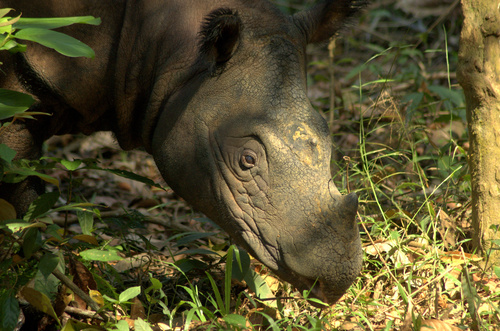
Sumatran Rhinoceros
Dicerorhinus sumatrensis
Meet the 'Hairy Rhino,' a living fossil and the world's smallest rhinoceros. This elusive, two-horned resident of the Indonesian rainforest is one of the rarest and most mysterious mammals on Earth.
Quick Identification
Size
Height: 112–145 cm (44–57 in); Length: 2.36–3.18 m (7.7–10.4 ft); Weight: 500–1,000 kg (1,100–2,200 lb)
Colors
Greyish skin covered in a distinctive coat of reddish-brown hair; horns are dark grey or black.
Key Features
- Shaggy, reddish-brown hair covering most of the body
- Two horns, with the nasal horn significantly larger than the posterior horn
- Smallest extant rhinoceros species with a primitive, stocky build
- Prominent skin folds around the neck and behind the front legs
When You’ll See Them
Behavior
The Sumatran Rhinoceros is a solitary and elusive creature, spending much of its day submerged in mud wallows to regulate its body temperature and protect its sensitive skin from tropical insects. They are surprisingly agile and are known to be excellent climbers in steep, hilly terrain. Unlike many other rhino species, they are quite vocal, utilizing a range of sounds including whines, whistles, and 'eeps' to communicate in the dense forest undergrowth.
Socially, they are territorial, with males maintaining large home ranges that overlap with those of several females. They mark their presence using dung heaps, known as middens, and by spraying urine on vegetation. Due to their critically endangered status and preference for remote, thick rainforests, they are one of the most difficult large mammals to observe, making any sighting a significant event for conservationists.
EverydayEarth exclusive
Camera Tips
Capturing a Sumatran Rhinoceros on camera is the ultimate challenge for any wildlife enthusiast. Because they are restricted to remote Indonesian rainforests, your camera placement must be strategic. Focus on 'hotspots' such as established game trails or the perimeters of known salt licks. These rhinos are creatures of habit and will often use the same ridge-top trails for generations. Set your camera at a height of approximately 3 feet (1 meter), as this aligns with their eye level and ensures you capture the profile of their unique double horns.
Water and mud are the keys to finding them. Look for active wallows—muddy pits where the earth is churned and there are fresh rub marks on nearby trees. Positioning your camera to overlook a wallow can provide incredible footage of their bathing behavior. Use a wide-angle lens setting if possible, as wallows are often in enclosed spaces with limited distance between the camera and the animal. Ensure your camera has a rapid trigger speed; the dense jungle canopy creates a 'tunnel' effect where animals appear and disappear into the shadows within seconds.
In the high-humidity environment of the rainforest, equipment durability is vital. Use high-quality, weather-sealed cameras and consider adding desiccant packets inside the housing to prevent lens fogging. Since these rhinos are most active at dawn, dusk, and night, 'No-Glow' black LED infrared flashes are mandatory to avoid startling the animal. Set your camera to record 20-30 second video clips with high-sensitivity audio; the unique vocalizations of the Sumatran Rhino are often the first sign of their presence and are invaluable for identification.
Lastly, be patient and minimize your scent. When checking cameras, wear gloves and avoid using scented soaps or detergents. The Sumatran Rhino has an incredible sense of smell and will avoid an area if it detects human odor. Use a high-capacity SD card and external battery pack if possible, as the frequent movement of tropical vegetation can trigger the PIR sensor often, and you don't want to miss a rare appearance due to a dead battery or full card.
Similar Species
Species that look similar or are commonly confused with Sumatran Rhinoceros.
Frequently Asked Questions
Record Sumatran Rhinoceros at your habitat
Connect a camera to start building your own species record — AI identifies every visitor automatically.