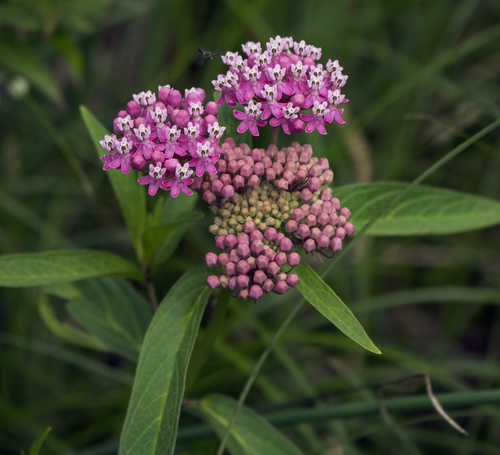
swamp milkweed
Asclepias incarnata
The crown jewel of the butterfly garden, swamp milkweed is a vibrant, vanilla-scented powerhouse that sustains Monarch butterflies and native pollinators across North America.
Quick Identification
Size
Grows 90-150 cm (3-5 feet) tall with a spread of 60-90 cm (2-3 feet)
Colors
Clusters of deep rose-pink to mauve flowers with white centers; stems and lance-shaped leaves are bright green.
Key Features
- Large, rounded clusters of pink flowers called umbels
- Opposite, narrow, lance-shaped leaves
- Produces milky white sap (latex) when stems are broken
- Height reaching up to 5 feet in wet conditions
When You’ll See Them
Geographic range
Where Does the swamp milkweed Live?
Swamp milkweed is native across the vast temperate regions of North America. Its core range spans from the edge of the Rocky Mountains in the west all the way to the Atlantic coast, and from southern Canada down through the central and eastern United States. It is most commonly found in the damp soils of the Midwest and Northeast, where its preferred wetland habitats are most abundant.
Basemap © OpenStreetMap contributors
Behavior
The plant plays a critical role in the life cycle of the Monarch butterfly, serving as a host where females lay their eggs and larvae feed on the foliage. The plant's 'behavior' is defensive; it produces cardiac glycosides that make the caterpillars that eat it unpalatable and toxic to birds. In the fall, the plant develops long, slender seed pods that eventually split open to release silky-haired seeds to be carried away by the wind.
EverydayEarth exclusive
Camera Tips
To capture the incredible biodiversity that swamp milkweed attracts, mount your camera on a stake approximately 3 to 4 feet high, positioning the lens to look slightly down onto the flower clusters (umbels). Because the flowers are the main attraction, focusing on the top third of the plant will yield the best shots of visiting Monarchs, Swallowtails, and various native bees. If your camera allows for macro settings or has a close-focus range, this is the perfect species to utilize it, as the intricate flower structures and the 'proboscis' of feeding butterflies make for stunning footage.
Timing is critical for getting the best action. Pollinators are most active during the warmest parts of the day, typically between 10:00 AM and 3:00 PM. Position your camera so that the sun is behind it or to the side to avoid washing out the vibrant pink hues of the blossoms. Using a high-speed trigger or 'burst' photo mode is highly recommended, as the wings of hummingbirds and clear-wing moths—frequent visitors to this plant—move too fast for standard shutter speeds.
Beyond just the flowers, consider a secondary camera placement lower down the stem during July and August. This is the peak time for Monarch caterpillars, which can often be filmed grazing on the undersides of the lanceolate leaves. A time-lapse setting of one frame every 10-15 minutes can also document the fascinating process of the seed pods (follicles) opening in late summer, revealing the shimmering, silken seeds as they prepare for flight.
Similar Species
Species that look similar or are commonly confused with swamp milkweed.
Frequently Asked Questions
Record swamp milkweed at your habitat
Connect a camera to start building your own species record — AI identifies every visitor automatically.