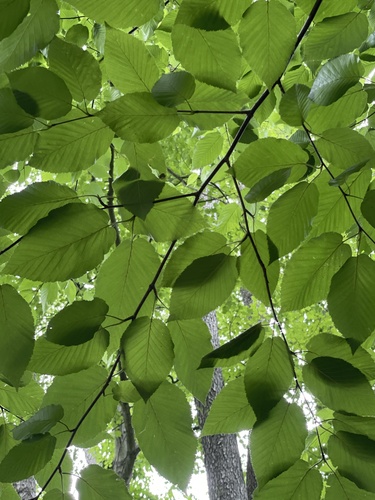
sweet birch
Betula lenta
The sweet birch is the aromatic soul of the eastern forest, offering a spicy wintergreen scent and a golden autumn glow. A favorite of sapsuckers and songbirds alike, this sturdy tree turns any backyard into a bustling wildlife corridor.
Quick Identification
Size
Typically 40-70 feet (12-21 meters) tall with a trunk diameter of 2-3 feet (0.6-0.9 meters)
Colors
Young bark is shiny, reddish-brown to nearly black; mature bark is thick and grayish-black; leaves turn brilliant golden-yellow in fall.
Key Features
- Dark, non-peeling bark resembling a cherry tree
- Twigs have a strong wintergreen scent and taste when scraped
- Long, drooping male catkins (3-4 inches) appearing in spring
- Simple, heart-shaped leaves with double-serrated edges
When You’ll See Them
Behavior
The sweet birch, also known as the cherry birch or black birch, is a slow-growing but long-lived deciduous tree that serves as a vital anchor in eastern North American forests. Unlike its white-barked cousins, the sweet birch does not peel; instead, it develops a rugged, plated character as it ages. It is famous for its chemical defense—methyl salicylate—the same compound found in wintergreen, which gives the twigs and bark a refreshing aroma that discourages some herbivores.
For the backyard nature enthusiast, this tree acts as a vertical ecosystem. It provides structural support for nesting birds and a rich foraging ground for insectivores. In the spring, its wind-pollinated catkins release clouds of pollen, while in the fall and winter, its small winged seeds (nutlets) provide a high-energy food source for goldfinches, pine siskins, and small mammals. Its relationship with humans is long-standing, once being the primary source for commercial oil of wintergreen and birch beer sap.
EverydayEarth exclusive
Camera Tips
Capturing the life surrounding a sweet birch requires a focus on the tree as a 'stage' for other species. Position your AI camera on a sturdy tripod or a neighboring tree about 6 to 10 feet away from the main trunk. To capture the texture of the bark and the birds that glean insects from its crevices, like nuthatches and woodpeckers, set the camera at chest height and angle it slightly upward. If you are using an AI-powered camera that triggers on movement, the dark bark of the sweet birch provides a perfect high-contrast background for brightly colored birds like Northern Cardinals or Blue Jays.
For those interested in the 'birch beer' aspect of the tree, keep an eye out for Yellow-bellied Sapsuckers. They often drill neat rows of holes in the bark. Mounting a camera near these 'sap wells' is a surefire way to capture not just the woodpeckers, but also the hummingbirds, butterflies, and squirrels that move in to steal a drink of the sweet, nutrient-rich sap. Ensure your camera's shutter speed is high (at least 1/500s) to freeze the motion of these fast-moving visitors.
Don't ignore the base of the tree. The sweet birch drops thousands of tiny seeds in the winter. Placing a camera 12-18 inches off the ground near the roots can capture incredible footage of dark-eyed juncos and various rodents foraging in the snow. During the autumn, the golden leaf drop creates a vibrant carpet; use a 'macro' or 'close-focus' setting if available to capture the intricate serrations of the fallen leaves. Lastly, because this tree has dark bark, avoid direct backlighting from the sun, which can cause the tree to appear as a featureless silhouette; north-facing camera placements usually provide the most consistent, even lighting throughout the day.
Similar Species
Species that look similar or are commonly confused with sweet birch.
Frequently Asked Questions
Record sweet birch at your habitat
Connect a camera to start building your own species record — AI identifies every visitor automatically.