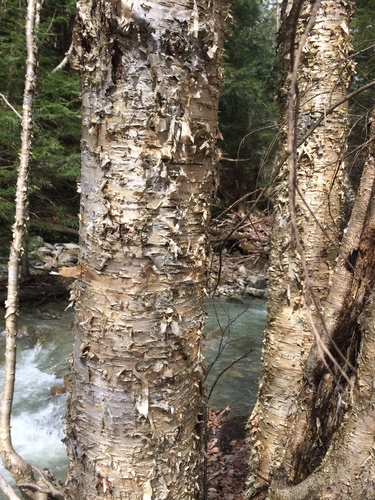
yellow birch
Betula alleghaniensis
The yellow birch is the golden gem of the North American woods, recognizable by its shimmering, papery bark and aromatic wintergreen twigs. It is more than just a beautiful tree; it is a vertical ecosystem that supports everything from sapsuckers to wintering songbirds.
Quick Identification
Size
60-80 feet (18-24 m) tall with a trunk diameter of 2-3 feet (0.6-0.9 m)
Colors
Distinctive golden-yellow to bronze bark with a metallic sheen; peels in thin, horizontal papery strips; older trunks become darker and fissured into plates.
Key Features
- Shiny yellowish-bronze peeling bark
- Crushed twigs have a distinct wintergreen scent
- Ovate, double-toothed leaves 3-5 inches long
- Distinctive cone-like fruits (strobiles) that stand upright on branches
When You’ll See Them
Behavior
In the ecosystem, this tree acts as a vital pantry for wildlife. Throughout the winter, its small, winged seeds drop onto the snow, providing a critical food source for various northern finches. Its sap is also highly sugary, second only to the sugar maple, making it a primary target for sapsuckers and a variety of insects in the early spring. Unlike the shorter-lived paper birch, the yellow birch maintains a stately presence in stable, climax forests.
EverydayEarth exclusive
Camera Tips
If you want to capture the wildlife that frequents the yellow birch, focus your camera on the main trunk at a height of 5 to 7 feet. This is the 'sweet spot' for Yellow-bellied Sapsuckers. These birds drill horizontal rows of sap wells into the bark. Once these wells are established, your camera will likely capture not just the sapsuckers, but also hummingbirds, squirrels, and butterflies that visit to steal the energy-rich sap. Use a high-sensitivity trigger and a fast shutter speed to freeze the motion of these visitors against the golden texture of the bark.
During the winter, try a 'ground-level' setup. Because yellow birch seeds are tiny and lightweight, they often accumulate in depressions in the snow around the base of the tree. Set your camera on a low-profile mount just 6 inches off the ground, facing a patch of snow where seeds have fallen. This is an excellent way to get rare, eye-level footage of Pine Siskins, Common Redpolls, and Dark-eyed Juncos that are usually foraging high in the canopy but come to the ground to glean these fallen nutlets.
For those lucky enough to have an older birch with 'stilted' roots, place a camera aimed directly into the hollows beneath the trunk. These small caves are high-traffic areas for ermines, voles, and woodland jumping mice seeking shelter from predators. Use a camera with a good 'close-focus' capability and a black-flash (no-glow) infrared LED to avoid startling these shy mammals in the dark recesses of the root system.
Similar Species
Species that look similar or are commonly confused with yellow birch.
Paper Birch
Has bright white bark that peels in large, thick sheets and lacks the wintergreen scent in its twigs.
Sweet Birch
Has darker, non-peeling bark that resembles cherry tree bark and a much stronger wintergreen scent.
River Birch
Bark is more salmon-pink or cinnamon-colored and peels in much more aggressive, shaggy papery layers.
Frequently Asked Questions
Record yellow birch at your habitat
Connect a camera to start building your own species record — AI identifies every visitor automatically.