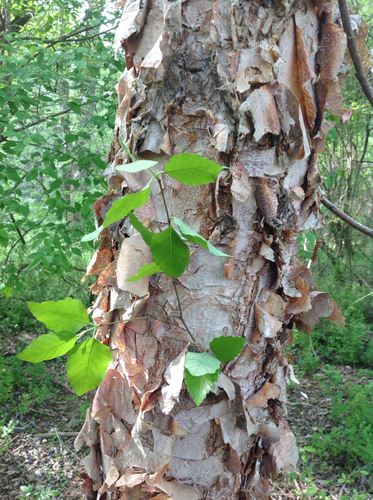
river birch
Betula nigra
A striking sentinel of the American wetlands, the river birch is famous for its dramatic, papery bark and its ability to thrive where other trees fear to wade. It is a resilient beauty that brings year-round texture and vital wildlife support to any backyard landscape.
Quick Identification
Size
Typically grows 40–70 feet (12–21 meters) tall with a spread of 40–60 feet (12–18 meters); trunk diameter 1–2 feet (30–60 cm).
Colors
Salmon-pink to cinnamon-brown peeling bark; glossy dark green leaves that turn bright yellow in autumn.
Key Features
- Distinctive exfoliating bark that peels in papery layers
- Diamond-shaped leaves with double-toothed margins
- Produces drooping 2–3 inch flower catkins
- Often grows in multi-stemmed clumps.
When You’ll See Them
Behavior
The river birch is a fast-growing, deciduous tree that plays a vital role in stabilizing riverbanks and preventing soil erosion. Unlike many of its birch cousins that prefer the cold northern climates, the river birch is remarkably heat-tolerant, making it a staple of the American Southeast. It acts as a pioneer species, often being one of the first trees to colonize wet, open areas after a flood or clearing.
Ecologically, the tree is a hub of activity. In early spring, it is one of the first trees to produce pollen via its drooping catkins, providing an essential early-season food source for pollinators. Throughout the year, its dense, often multi-stemmed canopy provides excellent nesting sites for songbirds, while the nooks and crannies of its peeling bark offer wintering spots for various beneficial insects.
EverydayEarth exclusive
Camera Tips
When using an AI-powered camera to monitor a river birch, the tree itself becomes your subject and your backdrop. To capture the most dramatic images of its signature peeling bark, mount your camera 5–10 feet away from the trunk. Use a side-lighting angle, such as facing East or West, to let the morning or evening sun catch the edges of the papery curls. This creates deep shadows and highlights that emphasize the tree's unique texture.
For those interested in the wildlife that visits the tree, place your camera higher up (6–8 feet) and angle it toward the lower branches. River birches are magnets for goldfinches and chickadees who come to eat the seeds from the catkins. If your camera has a time-lapse mode, set it to trigger once every hour during the spring. This will allow you to see the rapid unfurling of leaves and the transition from flower to seed, which is a fascinating process to watch in high speed.
In the winter, the river birch is the star of the show against a snowy backdrop. If you live in a region with snow, ensure your camera's exposure settings are adjusted so the white snow doesn't wash out the delicate salmon-pink tones of the bark. Since this species often grows in wet areas, ensure your camera mount is extremely stable; soil near river birches can be soft, and wind can cause enough vibration in the tree to trigger false motion alerts if the camera is strapped directly to a thin limb.
Finally, consider the base of the tree as a prime location for ground-dwelling wildlife. The wide, spreading roots of an older river birch often create small hollows and protected areas. Aim a second camera toward the base of the trunk at a low angle (about 12 inches off the ground) to capture small mammals like chipmunks or even amphibians like wood frogs that seek out the moist environment provided by the tree’s shade.
Similar Species
Species that look similar or are commonly confused with river birch.
Frequently Asked Questions
Record river birch at your habitat
Connect a camera to start building your own species record — AI identifies every visitor automatically.