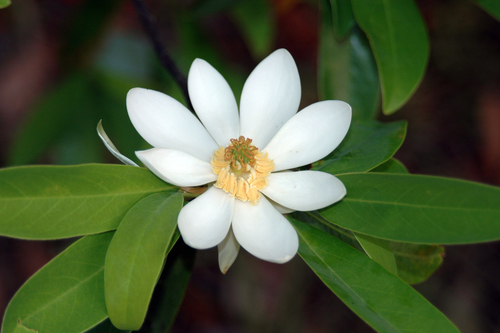
sweetbay magnolia
Magnolia virginiana
With its intoxicating lemony fragrance and shimmering silvery foliage, the sweetbay magnolia is the elegant centerpiece of the American wetland. Often called the 'Swamp Magnolia,' this graceful tree bridges the gap between wild marshes and backyard rain gardens.
Quick Identification
Size
Typically 10-35 feet (3-10 meters) tall with a 10-20 foot (3-6 meter) spread; can reach 60 feet (18 meters) in southern climates.
Colors
Glossy dark green leaves with striking silvery-white undersides; creamy white cup-shaped flowers; bright red seeds in cone-like fruit.
Key Features
- Creamy white 2-3 inch flowers with a distinct lemony fragrance
- Glossy green leaves with a vivid, shimmering silver underside
- Small, multi-stemmed growth habit often appearing as a large shrub
- Cone-like fruit clusters that burst to reveal bright red seeds
When You’ll See Them
Behavior
The sweetbay magnolia is a graceful, slow-growing tree that acts as a focal point for biodiversity in the backyard. Unlike many other trees, it is often semi-evergreen, holding onto its leaves through mild winters in the south, while shedding them in northern climates. It is famously the "type species" for all flowering plants, representing the ancient lineage of the magnolia family.
Its behavior in the landscape is characterized by its interaction with the elements. When the wind blows, the tree appears to shimmer or change color as the silvery undersides of the leaves are exposed. It is a vital host plant for the Eastern Tiger Swallowtail and the Sweetbay Silkmoth, making it a bustling hub for insect activity during the spring and summer months.
For homeowners, it is a non-aggressive species that thrives in wet spots where other trees might struggle with root rot. Its flowers open in the late afternoon and remain fragrant through the night, attracting nocturnal beetles—its primary evolutionary pollinators—as well as early morning bees and butterflies.
EverydayEarth exclusive
Camera Tips
Capturing the sweetbay magnolia on camera requires a focus on both the botanical details and the wildlife it attracts. Because the flowers are relatively small compared to the Southern Magnolia, use a macro lens or a close-up setting on your trail cam. Position your camera about 3 to 5 feet from a budding branch. The flowers typically open in the late afternoon, so a timelapse setting during the hours of 3 PM to 7 PM can capture the stunning unfolding of the waxy, white petals.
To capture the "silvery shimmer" effect of the foliage, place your camera at a low angle looking up toward the canopy on a breezy day. Use a high shutter speed or a high-frame-rate video setting (60fps or higher) to avoid motion blur. This angle highlights the contrast between the dark green tops and the chalky white bottoms of the leaves, which is the tree's most distinctive visual trait.
If you are interested in wildlife visitors, focus your camera on the fruit clusters in late summer and early autumn. When the cone-like follicles split open to reveal the oily, bright red seeds, it becomes a magnet for birds. Position your camera at eye level with the fruit clusters to catch Blue Jays, Northern Flickers, and Gray Catbirds as they hover or perch to pluck the seeds. Use a motion-trigger sensitivity of 'High' for these fast-moving avian subjects.
For those monitoring pollinators, aim the camera at a cluster of freshly opened flowers during the evening. Since sweetbay magnolias are pollinated largely by beetles, look for movement within the cup of the flower. If your camera has a built-in LED or infrared flash, you can capture the nocturnal beetles and moths that visit the fragrant blooms after sunset without disturbing their natural patterns.
Similar Species
Species that look similar or are commonly confused with sweetbay magnolia.
Frequently Asked Questions
Record sweetbay magnolia at your habitat
Connect a camera to start building your own species record — AI identifies every visitor automatically.