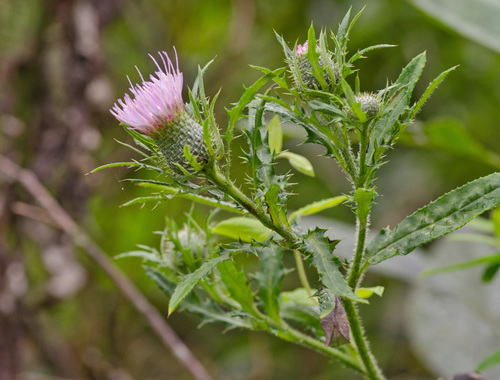
Tall Thistle
Cirsium altissimum
The Tall Thistle is a towering native wildflower that transforms backyards into a bustling sanctuary for butterflies and songbirds. With its majestic height and nectar-rich purple blooms, it is a vital cornerstone of the late-summer ecosystem.
Quick Identification
Size
Stands 1-3 meters (3-10 feet) tall; flower heads are 2.5-5 cm (1-2 inches) in diameter.
Colors
Deep pink to lavender-purple flower heads; dark green upper leaves with strikingly bright white, woolly undersides.
Key Features
- Impressive height reaching up to 10 feet
- Underside of leaves are solid, woolly white
- Stems are smooth and lack the prickly 'wings' of invasive thistles
- Leaves are typically broad and lance-shaped with shallow lobes
When You’ll See Them
Behavior
This plant is a master of multi-species interaction. During the day, its flowers are a bustling landing pad for long-tongued bees and butterflies. As the season progresses and the flowers turn to seed, the plant's role shifts from a nectar bar to a construction site and pantry. Songbirds frequently visit to harvest the 'thistledown' for nesting material and to feast on the oil-heavy seeds that provide critical energy for the coming winter.
EverydayEarth exclusive
Camera Tips
Because thistles are highly attractive to fast-moving insects and birds, use a camera with a high-sensitivity PIR sensor and a fast trigger speed. Set your camera to 'Hybrid Mode' (Photo + Video) if possible. This allows you to capture a high-resolution still image of a butterfly’s wing patterns followed by a video clip of the frantic, acrobatic way American Goldfinches cling to the swaying stalks to feed.
A unique challenge with Tall Thistle is its height and tendency to catch the wind. To prevent hundreds of 'false triggers' from the plant blowing in the breeze, try using a small garden stake to subtly secure the main flowering stem. You should also adjust your camera's sensitivity to 'Medium' on windy days. For the best lighting, ensure your camera is facing North or South to avoid the direct glare of the sun, which can wash out the vibrant purple of the flower heads.
Don't take your camera down once the flowers fade! The 'seeding' phase is often more active than the blooming phase. Keep the camera active through September and October to document 'thistledown' gathering. The sight of a goldfinch covered in white fluff while extracting seeds is a quintessential backyard wildlife moment that AI cameras are perfect for capturing.
Similar Species
Species that look similar or are commonly confused with Tall Thistle.
Frequently Asked Questions
Record Tall Thistle at your habitat
Connect a camera to start building your own species record — AI identifies every visitor automatically.