The Sallow
Xanthia icteritia
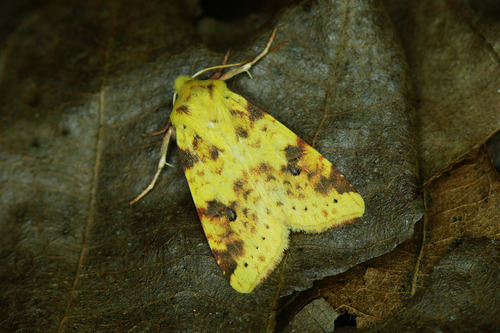
A golden gem of the autumn night, The Sallow moth perfectly mimics the falling leaves of the season. Its vibrant yellow wings and intricate purple patterns make it one of the most beautiful nocturnal visitors to your backyard garden.
Quick Identification
Size
Wingspan of 27-35 mm (1.1-1.4 inches); length approximately 15-20 mm (0.6-0.8 inches)
Colors
Primarily bright golden-yellow or orange-yellow; forewings feature purplish-brown or reddish marbling and a distinct small dark spot; hindwings are a pale, silky cream color.
Key Features
- Vibrant golden-yellow forewings with reddish-brown 'marbled' markings
- Small, dark kidney-shaped spot (reniform stigma) containing a smaller dark dot
- Flight period strictly limited to late summer and autumn
- Rests with wings folded in a roof-like shape
When You’ll See Them
Behavior
The Sallow is a classic harbinger of autumn, typically appearing as the leaves begin to turn. During the day, these moths are remarkably well-camouflaged, resting among yellowing foliage or fallen leaves where their bright coloration blends in perfectly with the seasonal debris. They are strictly nocturnal, emerging at dusk to seek out food sources and mates.
Unlike many moth species that do not feed as adults, The Sallow is an active forager. They are frequently seen visiting late-blooming flowers like ivy or feeding on overripe fruit and 'honeydew' secreted by aphids. They have a relatively docile temperament and are often found resting near light sources in suburban gardens, making them an excellent subject for backyard observation.
EverydayEarth exclusive
Camera Tips
To capture The Sallow on camera, your best bet is to focus on their feeding habits rather than random flight. Because they are highly attracted to fermented sugars, you can create a 'sugar station' by painting a mixture of dark beer, brown sugar, and treacle onto a tree trunk. Position your AI camera about 2 to 3 feet away from this station, ideally at eye level, using a macro lens setting if your hardware supports it to capture the intricate purple marbling on their wings.
Since these moths are most active during the cooling nights of September, ensure your camera's infrared (IR) sensors are clean. The Sallow’s yellow wings reflect IR light quite strongly, which can sometimes lead to 'white-out' photos where the detail is lost. If possible, angle your camera slightly to the side of your bait or light source rather than head-on to reduce glare and capture the moth's profile.
If you aren't using bait, place your camera near a patch of flowering ivy or a late-blooming Buddleia. The Sallow is a frequent visitor to these nectar sources. Set your trigger interval to its shortest setting; while these moths linger while feeding, they can be flighty if disturbed by wind or larger nocturnal visitors like bats or owls.
For the best results, monitor the weather. The Sallow is most active on warm, cloudy, and still autumn nights. Clear, cold nights with a full moon often result in less activity. If your camera allows for video, set it to 10-second clips—watching them unfurl their proboscis to drink nectar is a fascinating sight that a still photo just can't fully capture.
Similar Species
Species that look similar or are commonly confused with The Sallow.
Frequently Asked Questions
Record The Sallow at your habitat
Connect a camera to start building your own species record — AI identifies every visitor automatically.