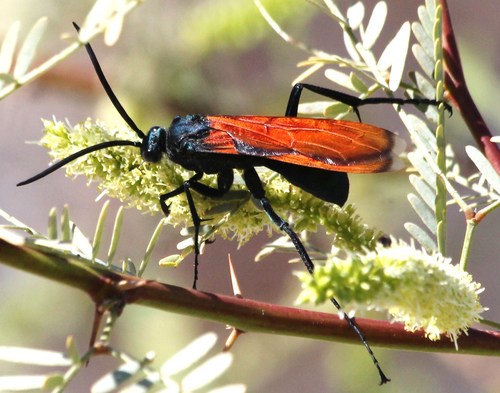
Thisbe's Tarantula-hawk Wasp
Pepsis thisbe
A shimmering titan of the insect world, Thisbe's Tarantula-hawk Wasp is a master of the desert garden, blending striking iridescent beauty with one of nature's most dramatic life cycles.
Quick Identification
Size
32–44 mm (1.25–1.75 inches) in length
Colors
Metallic blue-black iridescent body with vibrant orange-to-amber wings edged in black
Key Features
- Deep iridescent blue-black body
- Bright orange or amber-colored wings
- Extremely long, spindly legs with hooked claws
- Curled antennae on females, straight on males
- Robust, heavy-set wasp profile
When You’ll See Them
Behavior
Despite their intimidating size and fearsome reputation, Thisbe's Tarantula-hawk Wasps are surprisingly docile toward humans. As adults, they are primarily nectar-feeders, spending their days foraging among flowering plants. They are non-aggressive unless directly handled, though they possess one of the most painful stings in the insect world as a defense mechanism against predators.
The female's behavior is dictated by a fascinating and macabre reproductive cycle. She hunts tarantulas, engaging in a high-stakes duel to paralyze the spider with a precision sting. Once the spider is immobilized, she drags it to a burrow, lays a single egg on its abdomen, and seals the chamber. The resulting larva then feeds on the living but paralyzed spider. Males do not hunt; instead, they are often found 'hilltopping,' perching on high vegetation to scout for potential mates.
EverydayEarth exclusive
Camera Tips
To capture the brilliant iridescence of Thisbe's Tarantula-hawk Wasp, location is everything. These wasps are nectar junkies, so aim your camera at high-value floral targets. In the Southwest, milkweed (Asclepias), mesquite, and desert willow are magnets for them. Set your camera on a tripod about 12 to 24 inches from a cluster of blooms. Using a macro lens or a close-focus setting will allow you to see the incredible detail of their velvet-textured bodies and hooked tarsi.
Lighting is your best friend when filming this species. Their metallic blue-black bodies can look flat in the shade but transform into shimmering jewels under direct sunlight. Position your camera so the sun is behind you, illuminating the wasp as it lands. Because they move quickly and their wings beat rapidly, use the highest frame rate your camera supports (60fps or 120fps). This will allow you to slow down the footage in post-production to appreciate the mechanical elegance of their flight.
In hot, dry climates, water is an underrated lure. A shallow birdbath with flat stones for perching can attract these wasps for a drink. Place your camera at a low angle, nearly level with the water's surface, to capture the wasp's reflection. This perspective provides a sense of scale and highlights their long, spindly legs as they balance on the water's edge.
If you are lucky enough to have tarantulas in your area, keep an eye out for burrows in the late afternoon. Placing a trail camera near a known spider hole can sometimes capture the rare 'hunt.' Since these interactions can be fast and cover a lot of ground, use a wide-angle setting and ensure the camera is triggered by high-speed motion to avoid missing the start of the encounter.
Similar Species
Species that look similar or are commonly confused with Thisbe's Tarantula-hawk Wasp.
Frequently Asked Questions
Record Thisbe's Tarantula-hawk Wasp at your habitat
Connect a camera to start building your own species record — AI identifies every visitor automatically.