threadleaf sedge
Carex filifolia
The iron-willed 'curly grass' of the Western plains, threadleaf sedge is a master of survival. This wiry perennial anchors the earth and provides the very first taste of spring for backyard wildlife.
Quick Identification
Size
Height ranges from 10–30 cm (4–12 inches); leaves are extremely narrow, often less than 1 mm (0.04 inches) wide.
Colors
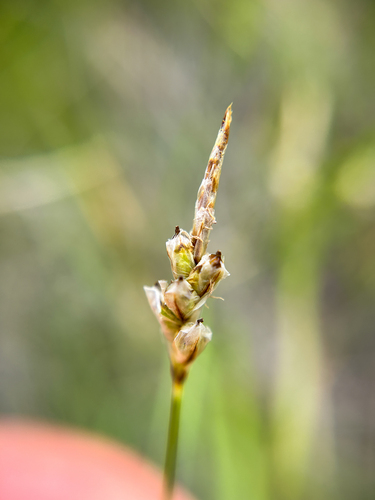
Bright green to olive foliage; leaf bases are distinctive dark brown to blackish; flowering spikes are golden-brown.
Key Features
- Dense, tufted 'bunchgrass' growth habit
- Extremely thin, thread-like wiry leaves
- Dark, fibrous sheaths at the base of the plant
- Single solitary flower spike at the stem tip
When You’ll See Them
Geographic range
Where Does the threadleaf sedge Live?
Native to the rugged interior of Western North America, threadleaf sedge thrives across a vast geographical footprint. Its range begins in the northern subarctic regions of Alaska and the Yukon, stretching southward through the Canadian prairies of Alberta and Saskatchewan. In the United States, it is a dominant feature of the Great Plains and the Rocky Mountain corridor, extending as far south as New Mexico and westward into the dry interior mountains of California.
Basemap © OpenStreetMap contributors
Behavior
Threadleaf sedge is a long-lived perennial plant known for its incredible resilience in harsh, dry environments. Unlike many garden sedges that crave moisture, this species is a pioneer of the arid West, forming tight, durable clumps that can live for decades. It is one of the first plants to 'green up' in the early spring, often providing the earliest source of nutrition for foraging wildlife as the snow melts.
Ecologically, it acts as a silent architect of the landscape. Its deep, incredibly dense root system—which can account for a significant portion of its total biomass—knits the soil together, preventing erosion on steep slopes and windswept prairies. While it doesn't move, it interacts with humans as a hardy, low-maintenance alternative for xeriscaping and as a vital indicator of range health for landowners.
EverydayEarth exclusive
Camera Tips
Capturing threadleaf sedge on camera requires a different approach than fast-moving fauna. To highlight its unique 'thread-like' texture, set your camera to a macro or close-focus mode. Positioning the camera at a low 'worm's-eye view' (about 2-4 inches off the ground) allows you to capture the plant’s silhouette against the sky, which emphasizes the delicate leaves and the solitary seed heads that appear in late spring.
Because this species is a primary food source, it makes an excellent 'bait station' for your trail camera without using artificial food. Place your camera facing a healthy patch of threadleaf sedge in the early spring (March-May). You are likely to capture high-quality footage of mule deer, elk, and various ground squirrels who visit these specific clumps for their first fresh meal of the season.
Use a time-lapse setting if your camera supports it. Setting the camera to take one photo every 24 hours at high noon will allow you to create a stunning sequence of the plant ‘greening up’ and flowering over a two-month period. Ensure the camera is mounted to a very sturdy stake, as the wind in threadleaf sedge habitats (typically open prairies) can cause significant camera shake.
Pay attention to the lighting. The golden hour—just before sunset—is the best time to capture the golden-brown flower spikes. If your camera has adjustable exposure, slightly underexposing the shot can help prevent the thin leaves from being 'blown out' or lost in bright sunlight.
Similar Species
Species that look similar or are commonly confused with threadleaf sedge.
Frequently Asked Questions
Record threadleaf sedge at your habitat
Connect a camera to start building your own species record — AI identifies every visitor automatically.