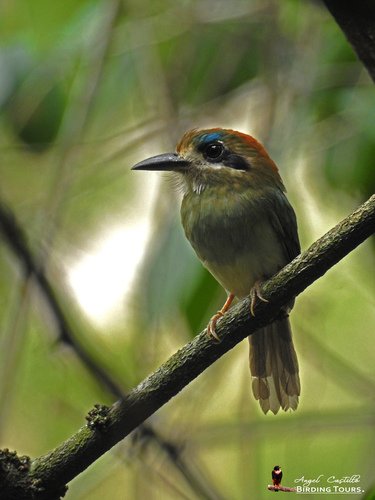
Tody Motmot
Hylomanes momotula
Meet the Tody Motmot, the miniature, racquet-less wonder of the Central American understory. Small in size but big on character, this elusive 'forest hoot' is a master of patience and camouflage.
Quick Identification
Size
16.5–18 cm (6.5–7 in) in length; weighs approximately 25–30 g (0.9–1.1 oz)
Colors
Olive-green upperparts and breast; cinnamon-rufous crown and nape; buffy-white throat; prominent black mask behind the eye; no racquet-shaped tail feathers
Key Features
- Smallest species of motmot
- Lacks the signature racquet-shaped tail of other motmots
- Distinctive rufous/cinnamon cap
- Black ear patch or 'mask'
- Broad, serrated bill for gripping large insects
When You’ll See Them
Behavior
The Tody Motmot is the unassuming introvert of the motmot family. Unlike its more flamboyant, racquet-tailed cousins, this diminutive bird spends much of its time sitting perfectly still on low-hanging branches in the forest understory. It is a classic 'sit-and-wait' predator, often remaining motionless for several minutes, tilting its head occasionally as it scans the leaf litter for a snack.
While they are not highly social birds, they are often found in pairs that maintain a loose territory. Their presence is more often given away by their call—a soft, low-pitched hoot—rather than their movement. They are remarkably patient and rely heavily on their olive-green camouflage to remain undetected by predators and prey alike.
EverydayEarth exclusive
Camera Tips
To capture the Tody Motmot on camera, placement is everything. These birds are strictly understory dwellers, so you’ll want to position your camera much lower than you would for most birds—usually between 2 to 4 feet off the ground. Focus your lens on horizontal branches or vines that sit near dense thickets, as these are their preferred perching spots for hunting. Because they are so small and blend in with the foliage, aim for a spot where the background is slightly more open to help the bird's profile stand out.
Since Tody Motmots are famous for sitting still for long stretches, your camera’s motion sensor needs to be highly sensitive. If your camera allows for it, use a 'Video' mode with a longer trigger duration (15-20 seconds) rather than just photos. This increases your chances of catching them in the act of 'sallying'—that sudden, explosive burst where they fly out to grab an insect and return to the same spot. If your camera has a pre-roll feature, turn it on; the action happens in a blink of an eye.
Attracting them can be tricky since they don't visit traditional seed feeders. However, a small, dripping water feature or a shallow forest-floor birdbath can be a magnet for them, especially during the dry season. They are most active during the 'golden hours' of early morning and late afternoon. Set your camera's sensitivity to high to ensure the dim light of the forest floor doesn't result in missed triggers. If you are using an AI-powered camera, ensure the bird detection is prioritized, but be prepared for some false triggers from moving leaves due to the low placement required for this species.
Similar Species
Species that look similar or are commonly confused with Tody Motmot.
Frequently Asked Questions
Record Tody Motmot at your habitat
Connect a camera to start building your own species record — AI identifies every visitor automatically.