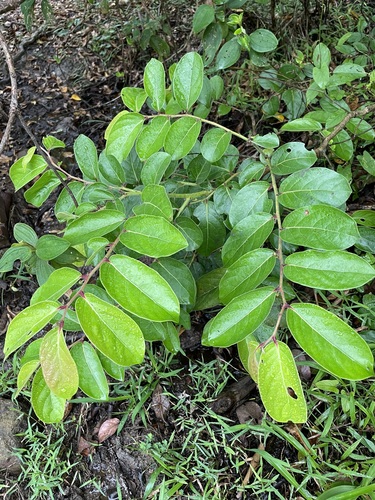
Umbrella Cheese Tree
Glochidion zeylanicum
With its iconic wheel-shaped fruit and broad, sheltering canopy, the Umbrella Cheese Tree is a cornerstone of tropical biodiversity. It hosts a fascinating world of specialized moths and hungry birds within its glossy green branches.
Quick Identification
Size
Grows 6 to 15 meters (20 to 50 feet) tall, with a canopy spreading 5 to 10 meters (16 to 33 feet) wide.
Colors
Glossy deep green foliage, pale yellow or greenish flowers, and pink to reddish-brown fruit capsules.
Key Features
- Broad, umbrella-shaped canopy
- Flattened, ribbed fruit capsules resembling small cheese wheels
- Leathery, ovate leaves 10-20 cm long
- Small, clustered flowers in leaf axils
When You’ll See Them
Geographic range
Where Does the Umbrella Cheese Tree Live?
The Umbrella Cheese Tree is a widespread species native to the tropical and subtropical regions of Asia and the southwestern Pacific. Its primary range begins in the Indian subcontinent and stretches through Indochina and southern China into Taiwan and southern Japan. It is also a prominent fixture across the Malesian islands and Papuasia, reaching as far south as the northern tropical coasts of Australia and extending into the islands of Vanuatu.
Basemap © OpenStreetMap contributors
Behavior
Beyond its insect partners, the tree acts as a central hub for backyard biodiversity. Its dense, spreading canopy provides a high-quality cooling shade and secure nesting sites for various tropical bird species. When the fruit capsules ripen and split open, they reveal bright seeds that attract a wide array of seed-dispersing birds and small mammals, making it a focal point of activity in any ecosystem.
EverydayEarth exclusive
Camera Tips
Because this tree is a magnet for wildlife, it is an ideal location for a trail camera. Mount your device on a nearby branch or a sturdy tripod facing a clear opening in the foliage. This setup is perfect for catching birds like honeyeaters or pigeons that visit for the fruit. Since the tree's symbiotic moths are active after dark, a camera with a high-quality infrared flash can help you document the pollination process or spot nocturnal mammals like fruit bats or gliders that may use the canopy as a bridge or feeding site.
Timing is everything when it comes to lighting. The glossy leaves of the Umbrella Cheese Tree can create a lot of glare in the midday sun. For the best results, set your camera to capture during the 'golden hours' of early morning and late afternoon. The softer light will accentuate the texture of the leaves and the vibrant colors of the seed pods. If you are interested in plant development, this species is a great candidate for a time-lapse project over several weeks to witness the seed pods splitting open to reveal their colorful interiors.
Similar Species
Species that look similar or are commonly confused with Umbrella Cheese Tree.
Frequently Asked Questions
Record Umbrella Cheese Tree at your habitat
Connect a camera to start building your own species record — AI identifies every visitor automatically.