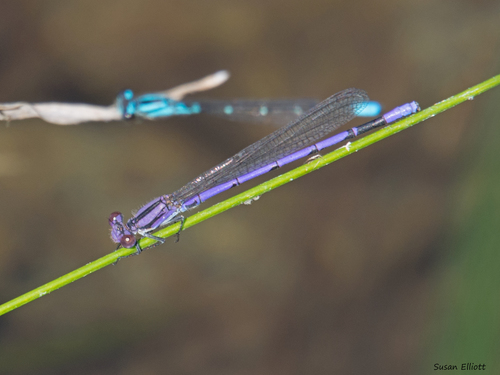
Variable Dancer
Argia fumipennis
A flash of neon purple in the reeds, the Variable Dancer is one of nature's most vibrant aerial acrobats. Found dancing over backyard ponds and slow streams, these damselflies are as much a delight for the eyes as they are a benefit for natural pest control.
Quick Identification
Size
Length: 1.1 to 1.5 inches (29 to 38 mm); Wingspan: approximately 1.5 to 2 inches (38 to 51 mm).
Colors
Males typically feature a striking violet or vibrant purple thorax and abdomen, though some subspecies are blue. Females are more camouflaged in shades of tan, brown, or grayish-blue. Both sexes possess clear or smoky-tinted wings.
Key Features
- Vibrant violet-purple coloration in males
- Long, conspicuous black spines on the legs
- Wings held vertically together over the back when resting
- Short, jerky 'dancing' flight pattern close to the ground
When You’ll See Them
Behavior
Variable Dancers earn their name from their distinctive, rhythmic flight style. Instead of the smooth, gliding flight seen in larger dragonflies, these damselflies move in short, bouncy bursts that make them appear to be dancing through the air. They are low-altitude fliers, rarely venturing high into the canopy, preferring to stay within a few feet of the water's surface or the ground where they can easily find perches.
These damselflies are highly territorial and social, often congregating in large numbers around favorable sunny spots. You will frequently see males 'patrolling' a small stretch of shoreline or a specific rock, chasing away rivals with sudden aerial maneuvers. Unlike many other insects that flee at the slightest movement, Variable Dancers are relatively bold and will often allow a camera or an observer to get quite close, provided movements are slow and steady.
EverydayEarth exclusive
Camera Tips
To capture the stunning iridescent purple of a male Variable Dancer, positioning is everything. Focus your AI-powered camera on 'high-traffic' perching zones. These damselflies love flat, sun-drenched surfaces near water—think flat stones at the edge of a pond or low-hanging horizontal twigs. Set your camera height low, ideally between 12 and 18 inches from the ground, to capture them at eye level. This perspective highlights the intricate details of their leg spines and wing veins.
Lighting is the most critical factor for these metallic insects. They are most active during the brightest parts of the day when the sun is high. Aim your camera toward a spot that receives full sun between 11 AM and 2 PM. However, to avoid harsh 'blown out' highlights on their shiny bodies, try to angle the camera so the sun is at your back or slightly to the side. This side-lighting will make the violet hues of the Variable Dancer glow against a darker background of foliage.
Because damselflies are small and fast, use a camera with a high-speed trigger and a short minimum focus distance. If your camera supports 'macro' or 'close-up' modes, ensure they are enabled. You can encourage Variable Dancers to land in your camera's frame by placing a 'feature rock' or a specific bamboo stake in a sunny spot near your water feature. Since they are attracted to movement and water, a small solar fountain nearby can also help draw them into the area, though they will usually settle on a still perch to bask.
Similar Species
Species that look similar or are commonly confused with Variable Dancer.
Blue-fronted Dancer
The male is a bright, pale blue rather than violet, and often has a distinctively pale or white 'face' and tip of the abdomen.
Ebony Jewelwing
Much larger with solid black wings and a metallic green body; it lacks the 'jerky' dancing flight of the Argia genus.
Blue-ringed Dancer
Features a black abdomen with thin blue rings, lacking the solid violet or purple wash of the Variable Dancer.
Frequently Asked Questions
Record Variable Dancer at your habitat
Connect a camera to start building your own species record — AI identifies every visitor automatically.