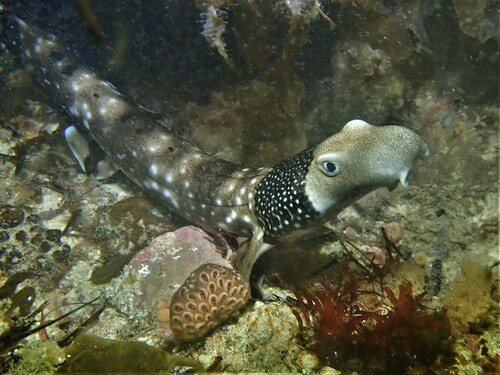
Varied Carpetshark
Parascyllium variolatum
Adorned with a striking 'necklace' of spots, the Varied Carpetshark is a shy, nocturnal beauty of Australia's southern reefs. This slender shark moves with feline grace across the ocean floor, disappearing into the shadows by day.
Quick Identification
Size
60–91 cm (24–36 inches) in length; typically weighs less than 2 kg (4.4 lbs)
Colors
Rusty brown to greyish-tan body covered in white spots and dark blotches; characterized by a prominent dark 'necklace' or collar with white spots around the gill region
Key Features
- Distinctive black-flecked 'necklace' band behind the head
- Elongated, slender eel-like body shape
- Small, oval-shaped 'cat' eyes
- Two dorsal fins of equal size positioned far back on the body
When You’ll See Them
Behavior
The Varied Carpetshark, often called the Necklace Carpetshark, is a master of camouflage and a true creature of the night. During the daylight hours, these sharks are nearly invisible to the casual observer, as they wedge their flexible, slender bodies into deep rocky crevices or blend perfectly into the dappled shadows of kelp forests and seagrass meadows. They are remarkably sedentary during the day, often remaining completely motionless for hours to avoid detection by larger predators.
When the sun sets, the Varied Carpetshark becomes an active, albeit slow-moving, hunter. They use their sensitive snouts and barbels to navigate the seafloor, 'walking' over the substrate using their pectoral and pelvic fins. They are generally solitary and non-aggressive towards humans; in fact, they are quite timid and will usually retreat into the darkness if approached by a diver with a bright torch. Because they lack the aggressive temperament of larger sharks, they are a favorite find for night-divers in southern Australian waters.
EverydayEarth exclusive
Camera Tips
Capturing the Varied Carpetshark requires a specialized underwater setup, often referred to as a Baited Remote Underwater Video (BRUV) system. To get the best results, place your waterproof camera housing on a weighted base or tripod in areas where rocky reef meets sandy clearings or seagrass edges. These 'edge' zones are the primary travel corridors for carpetsharks as they forage for crustaceans. Aim the lens horizontally along the seafloor, roughly 10-15 inches above the substrate, to capture their unique 'walking' motion.
Since these sharks are strictly nocturnal, artificial lighting is essential. However, Varied Carpetsharks are light-sensitive and may be frightened by high-intensity white LEDs. For the most natural behavior, use a camera equipped with infrared (IR) capabilities or a red-light filter, which is less visible to marine life. If you must use white light, keep the intensity low and use a wide-angle diffuser to prevent 'hot spots' on the shark's reflective skin patterns.
Using a scent lure is the most effective way to bring a Varied Carpetshark into the frame. A perforated PVC 'bait cage' filled with crushed oily fish like sardines or mackerel will create a scent trail that these sharks can detect from a distance. Secure the bait cage approximately 3 to 5 feet in front of the camera lens to ensure the shark enters the focal range. In southern Australian waters, summer and autumn offer the best water clarity, though these sharks are present year-round. Ensure your camera is set to a high frame rate (60fps or higher) if you want to capture the subtle undulations of their body as they move through the kelp.
Similar Species
Species that look similar or are commonly confused with Varied Carpetshark.
Frequently Asked Questions
Record Varied Carpetshark at your habitat
Connect a camera to start building your own species record — AI identifies every visitor automatically.