Variegated Squirrel
Sciurus variegatoides
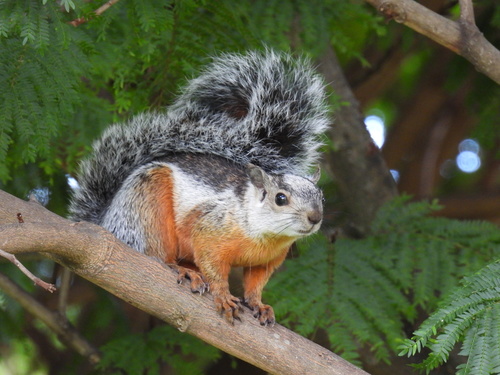
The ultimate master of variation, this stunning tree squirrel brings a splash of color and high-energy antics to the Central American canopy. From deep blacks to snowy whites, no two individuals look exactly the same.
Quick Identification
Size
Total length of 42–55 cm (16.5–21.7 in); weight between 500–900 g (1.1–2 lbs)
Colors
Extremely variable; patterns of black, white, cinnamon, and gray. Undersides range from pure white to deep orange.
Key Features
- Massive bushy tail often longer than the body
- Distinctive pale patches or 'frosting' behind the ears
- Highly variable coat patterns that differ by region
- Large, dark, expressive eyes
When You’ll See Them
Behavior
The Variegated Squirrel is the charismatic acrobat of the Central American canopy. Unlike many shy forest mammals, these squirrels are remarkably bold and have adapted exceptionally well to human presence, often becoming a common sight in suburban gardens and coffee plantations. They are primarily solitary, though you may occasionally spot a pair chasing each other through the branches during the breeding season. They are highly territorial over prime food sources and will use a series of 'chucks' and barks to warn off intruders.
In the wild, they build large, spherical nests called dreys made of twigs and leaves, usually high up in the crotch of a tree to avoid predators like capuchin monkeys and birds of prey. In residential areas, they are opportunistic, quickly learning the schedules of bird feeders or the ripening times of garden fruit trees. While they are fascinating to watch, it is important to observe them from a distance, as they can be quite defensive if cornered.
EverydayEarth exclusive
Camera Tips
To capture the Variegated Squirrel on camera, placement is everything. Because they are strictly arboreal and rarely spend significant time on the ground, avoid low-ground stakes. Instead, mount your camera directly to a tree trunk or a sturdy 'bridge' branch about 5 to 8 feet off the ground. Angle the camera slightly downward toward a flat junction where branches meet, as these serve as natural resting spots for the squirrels to scan for predators while eating.
Baiting is highly effective for this species. A platform feeder stocked with black oil sunflower seeds, corn, or halved tropical fruits like bananas or mangoes will act as a magnet. If you want to get creative, smear a bit of natural peanut butter (ensure it is xylitol-free) onto the bark directly in front of the lens. This encourages the squirrel to stay in the frame and lick the bark, giving you a perfect opportunity for high-detail close-ups of their unique facial markings.
Because these squirrels are incredibly fast and twitchy, set your camera to a fast trigger speed (0.2s or less if possible) and use a 'Burst' or 'Multi-shot' mode. They often flick their tails and change directions in milliseconds, so taking 3-5 photos per trigger ensures at least one crystal-clear shot. If your camera supports high-definition video, a 15-second clip will reveal much more of their playful personality than a still photo ever could.
Keep in mind the extreme variability in their coats. If you have multiple squirrels visiting, a camera is the perfect tool to tell them apart. Pay close attention to the tail patterns and the color of the underbelly. During the dry season, placing a mounted water dripper or a small elevated birdbath within the camera's view is an almost guaranteed way to capture frequent visits, as water becomes a premium resource.
Similar Species
Species that look similar or are commonly confused with Variegated Squirrel.
Frequently Asked Questions
Record Variegated Squirrel at your habitat
Connect a camera to start building your own species record — AI identifies every visitor automatically.