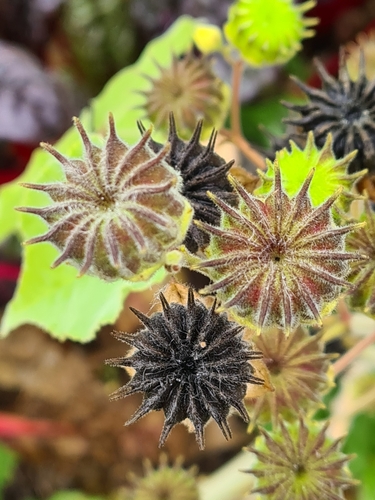
velvetleaf
Abutilon theophrasti
With leaves as soft as suede and seed pods that look like Victorian buttons, velvetleaf is a fascinating, fast-growing addition to your backyard observations. Once used to make rope, this resilient plant tells a story of survival and movement that comes alive through time-lapse photography.
Quick Identification
Size
Height: 1-2.5 meters (3-8 feet); Leaves: 10-25 centimeters (4-10 inches) wide
Colors
Light to medium green foliage; small yellow to orange-yellow flowers; dark brown to black seed pods
Key Features
- Heart-shaped leaves with a soft, velvety texture
- Distinctive circular seed pods with pointed 'beaks'
- Small yellow-orange flowers with five petals
- Strong, fibrous stems that can reach eight feet tall
When You’ll See Them
Behavior
Velvetleaf is a fast-growing annual plant known for its aggressive competitive nature in gardens and agricultural fields. It is a member of the mallow family and was originally introduced to North America as a potential fiber crop for rope making, earning it the nickname 'Chinese Jute.' Its most remarkable survival trait is its seed longevity; a single plant can produce thousands of seeds that remain viable in the soil for over 50 years, waiting for the right conditions to germinate.
The plant exhibits a behavior called solar tracking, or heliotropism, during its early growth stages, where the leaves tilt to follow the sun’s path across the sky to maximize photosynthesis. As the plant matures, it focuses its energy on upward growth, often shading out neighboring plants. While humans generally view it as a weed, it provides a micro-habitat for various insects and its seeds are occasionally consumed by small mammals and birds during the winter months.
EverydayEarth exclusive
Camera Tips
To capture the best footage of velvetleaf, positioning is everything. Because the plant is tall and lanky, place your camera on a tripod or a low-mounted stake about 3 to 4 feet off the ground. If you are using a camera with a time-lapse feature, this is the perfect subject. Set your interval to one frame every 30 to 60 minutes to capture the dramatic 'drooping' behavior of the leaves at night and their 'awakening' in the morning sun. This reveals a hidden world of plant movement that the naked eye often misses.
The velvet-like texture of the leaves, which gives the plant its name, is best captured using backlighting. Position your camera so that it faces the plant with the sun behind the foliage during the 'golden hour' (late afternoon). The light will catch the tiny hairs (trichomes) on the leaves and stems, creating a glowing halo effect that makes for stunning, professional-quality imagery. This setup also highlights the unique architectural shape of the seed pods, which look like miniature fluted pies.
If you are interested in the backyard visitors velvetleaf attracts, aim your camera specifically at the small yellow flowers. While they are relatively inconspicuous, they are frequent stops for small native bees and syrphid flies. Use a high-trigger-speed setting or a 'Macro' focal mode if your camera supports it, as these pollinators move quickly. Since the flowers only open for a few hours during the brightest part of the day, ensure your camera is active and has fresh batteries during the mid-day heat.
Finally, don't stop recording once the plant dies back in the autumn. The dried seed pods remain on the stalks throughout the winter and provide a high-contrast subject against the snow. These 'winter skeletons' are often visited by birds like goldfinches or small rodents looking for any remaining seeds. Keep your camera running during winter storms to capture the movement of these distinctive seed heads as they distribute their contents in the wind.
Similar Species
Species that look similar or are commonly confused with velvetleaf.
Frequently Asked Questions
Record velvetleaf at your habitat
Connect a camera to start building your own species record — AI identifies every visitor automatically.