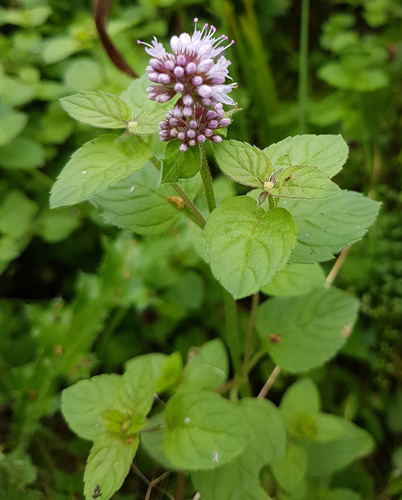
watermint
Mentha aquatica
The aromatic heartbeat of the pond edge, Watermint is a purple-hued powerhouse that filters your water and feeds the neighborhood's bees. Its refreshing scent and globe-like blooms make it the ultimate backyard wildlife anchor.
Quick Identification
Size
Grows 15–90 cm (6–36 inches) in height with a spreading width via rhizomes
Colors
Bright green to dark purple stems and leaves; pale lilac to soft purple flower globes
Key Features
- Rounded, ball-like flower clusters at the top of stems
- Square-shaped stems that are often hairy and purple-tinged
- Strong, pungent peppermint aroma when any part of the plant is crushed
When You’ll See Them
Behavior
During its flowering season, Watermint becomes a social centerpiece for the backyard. The nectar-rich, globe-like blooms are highly accessible to a wide variety of insects. It is common to see a single patch of Watermint covered in a vibrating mix of hoverflies, honeybees, and tortoiseshell butterflies. For the gardener and wildlife enthusiast, it acts as a reliable 'pollinator magnet' that bridges the gap between mid-summer and autumn forage.
EverydayEarth exclusive
Camera Tips
Lighting is crucial for this species. The lilac flowers can look washed out in the harsh midday sun, so set your camera to capture high-dynamic-range (HDR) images if possible, or focus your recording during the 'golden hours' of early morning or late afternoon. This softer light brings out the deep purples in the stems and the delicate textures of the leaves. If your camera has a macro mode, use it; the tiny individual florets that make up the 'ball' are fascinating when viewed up close.
For those using AI-triggered cameras, Watermint is the perfect location for a 'Pollinator Watch.' Set your trigger sensitivity to high and use short video bursts (5-10 seconds). This will help you identify the myriad of bees and butterflies that frequent the plant. Since Watermint doesn't move except in the wind, any motion detected is almost certainly a visitor. If you are tracking growth, a time-lapse setting of one photo every 2 hours over the course of July will show the dramatic 'explosion' of the flower buds into their spherical purple form.
Don't forget the 'creature' perspective. If you have a waterproof camera like a GoPro, try placing it partially submerged at the base of the Watermint stems. This can capture fascinating footage of amphibians like frogs or newts that use the dense mint stems as a 'forest' for cover while they hunt for small insects falling from the leaves above.
Similar Species
Species that look similar or are commonly confused with watermint.
Frequently Asked Questions
Record watermint at your habitat
Connect a camera to start building your own species record — AI identifies every visitor automatically.