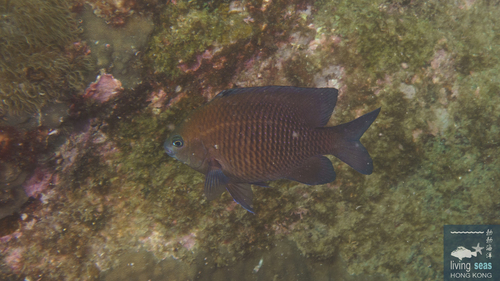
Western Gregory
Plectroglyphidodon obreptus
The feisty 'farmer' of the shallow reef, the Western Gregory is a small fish with a massive personality. Watch as this territorial gardener defends its algae patch with surprising boldness and tireless energy.
Quick Identification
Size
Maximum length of approximately 15 cm (6 inches).
Colors
Dark charcoal to blackish-brown overall; scales often have darker edges creating a faint barred appearance; juveniles may show more vibrant highlights.
Key Features
- Deep, oval-shaped body profile
- Thick, prominent lips
- Uniformly dark coloration with subtle vertical scale margins
- Extremely territorial behavior around algae patches
When You’ll See Them
Behavior
The Western Gregory is a quintessential 'farmer' of the reef. Unlike many fish that roam widely for food, this species claims a specific territory—usually a small patch of rocky reef—and aggressively defends it against all intruders, regardless of their size. They are famous for 'weeding' their territory, removing unpalatable algae to allow their preferred filamentous algae to grow, which they then harvest for food.
In social terms, they are largely solitary and highly cantankerous. If you are snorkeling or using an underwater camera near their patch, you might even see them 'charge' the lens or your fins. This boldness makes them excellent subjects for observation, as they rarely hide for long and will quickly return to their station to keep watch over their garden.
EverydayEarth exclusive
Camera Tips
Capturing the Western Gregory requires an underwater setup, such as a waterproof action camera or a specialized reef-cam housing. Because these fish are highly territorial, the best strategy is 'stationary surveillance.' Locate a patch of reef that looks particularly clean or 'manicured'—this is likely a Gregory's garden. Position your camera on a weighted tripod or mount it to a nearby rock (ensuring you don't damage any living coral) facing the center of the algal patch.
Patience is your best tool. Once you move away, the Western Gregory will return within minutes to inspect its territory. For the best clarity, aim for midday shooting (10 AM to 2 PM) when the sun is directly overhead, as this species lives in shallow water where light penetration is highest. Avoid using high-intensity flashes, which can wash out their dark, subtle scale details; natural light is far superior for showing their charcoal textures.
If you want to see them in action, look for 'interaction triggers.' When another herbivorous fish, like a parrotfish or surgeonfish, drifts too close, the Western Gregory will dart out in a display of defensive aggression. Set your camera to a high frame rate (60fps or higher) to capture these lightning-fast territorial disputes. If your camera has a macro setting, use it—the intricate patterns on their scales and their thick, expressive lips are fascinating when viewed up close.
Similar Species
Species that look similar or are commonly confused with Western Gregory.
Frequently Asked Questions
Record Western Gregory at your habitat
Connect a camera to start building your own species record — AI identifies every visitor automatically.