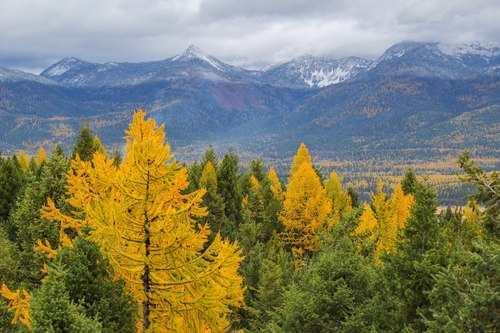
western larch
Larix occidentalis
The western larch is the golden giant of the Northwest mountains, a rare deciduous conifer that sets the forest ablaze with color every autumn. Towering and resilient, this fire-adapted spire provides a stunning, ever-changing backdrop for your backyard trail camera.
Quick Identification
Size
Height: 30-60 m (100-200 ft); Trunk diameter: 0.5-1.5 m (1.5-5 ft); Largest specimens can reach 80 m (260 ft)
Colors
Soft light-green needles in spring/summer; vibrant golden-yellow in autumn; cinnamon-brown to reddish-orange bark with deep furrows
Key Features
- Deciduous needles that turn brilliant gold and drop in winter
- Deeply furrowed, flaky cinnamon-colored bark on mature trees
- Tall, straight spire-like trunk with a short, narrow crown
- Small, egg-shaped cones (1-1.5 inches) with distinctive protruding bracts
When You’ll See Them
Behavior
The western larch is a fascinating contradiction in the plant world: a conifer that behaves like a deciduous tree. Unlike its evergreen cousins, the larch sheds its needles every autumn, a strategy that helps it survive heavy snow loads and the harsh winters of high-altitude environments. It is one of the most fire-adapted trees in the Pacific Northwest; its thick, cork-like bark protects the inner living tissue from the heat of forest fires, while its high canopy keeps sensitive needles away from the flames. This allows the larch to stand as a 'pioneer' species, often being the first to recolonize an area after a fire has cleared the competition.
In the ecosystem, the western larch is a hub of activity. Because it sheds its needles annually, the forest floor beneath a larch stand is exceptionally rich in nutrients, supporting a diverse undergrowth of shrubs and wildflowers that wouldn't thrive under denser shade. For humans and wildlife alike, the larch is a seasonal landmark. Its dramatic autumn transformation from green to gold is a major biological event, signaling the coming of winter and providing a temporary high-energy food source for various insects and the birds that hunt them.
EverydayEarth exclusive
Camera Tips
To capture the majesty of a western larch, your best strategy is a long-term time-lapse. Because this species undergoes such a dramatic seasonal shift, setting your AI-powered camera to take a daily high-resolution photo from the same spot starting in late September will allow you to create a stunning video of the 'golden shift.' Mount the camera on a sturdy post or a neighboring evergreen about 15-20 feet back to capture the full height of the tree. Ensure the lens is pointed slightly upward to catch the crown where the color changes first.
Western larches are 'apartment complexes' for wildlife, particularly cavity-nesting birds like woodpeckers, nuthatches, and owls who love the soft wood of older or decaying larches. For the best wildlife shots, place your camera roughly 5-8 feet up a mature larch trunk using a strap mount. Angle the camera downward slightly toward the lower branches or a known nesting cavity. You don’t need bait for the tree itself, but placing a birdbath or a small suet feeder nearby can draw in the species that naturally frequent larch forests, such as the Clark's Nutcracker.
Lighting is your biggest ally with this species. The cinnamon-colored bark and golden needles look most spectacular during the 'golden hour'—the hour after sunrise or before sunset. If your camera allows for manual exposure settings, slightly underexposing the shot can help the golden needles 'pop' against a dark forest background without blowing out the highlights. During the winter, even when the tree is bare, the unique texture of the bark makes for excellent high-contrast photography against the white snow.
If you are monitoring for mammalian visitors, focus on the base of the tree. The open canopy of larch stands allows for more sunlight to reach the ground, which often leads to a localized 'hotspot' of berry-producing shrubs. Placing your camera at a low angle (12-18 inches off the ground) near the base of a larch can help you capture deer, elk, or even bears foraging in the rich understory. In the spring, keep an eye out for the small, pinkish-red female cones which make for excellent macro-photography subjects if you have a camera with a close-focusing lens.
Similar Species
Species that look similar or are commonly confused with western larch.
Frequently Asked Questions
Record western larch at your habitat
Connect a camera to start building your own species record — AI identifies every visitor automatically.