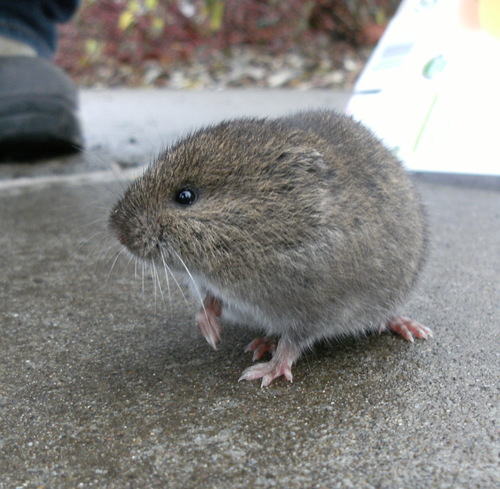
Western Red-backed Vole
Clethrionomys californicus
A mahogany-furred treasure of the Pacific Northwest, the Western Red-backed Vole is the silent gardener of the forest floor. Specialized to hunt for underground truffles, this elusive rodent is a key indicator of a thriving ancient woodland.
Quick Identification
Size
5.7-7.9 inches (14.5-20 cm) in length; weighs 0.5-1.4 oz (15-40 g)
Colors
Rich chestnut-brown or mahogany with black-tipped hairs; pale buffy-gray underbelly; dark, bi-colored tail
Key Features
- Indistinct reddish-brown stripe running down the back
- Short tail, roughly half the length of the head and body
- Small, rounded ears nearly hidden in thick fur
- Stocky, cylindrical body shape typical of forest voles
When You’ll See Them
Behavior
The Western Red-backed Vole is a shy, elusive specialist of the forest floor. Unlike many of its cousins that frequent open meadows, this species is strictly tied to the moist, shaded interior of mature coniferous forests. They spend the majority of their lives in the 'subnivean' or 'sub-litter' zone—the hidden world beneath fallen leaves, moss, and decaying logs. They are master tunnelers, creating complex networks through the duff layer to avoid the watchful eyes of hawks and owls.
Socially, these voles are primarily solitary and territorial, especially during the breeding season. They are remarkably well-adapted to their environment, serving as one of the forest's most important 'mycophagists' (fungi-eaters). By consuming underground truffles and spreading the spores through their droppings, they maintain a vital symbiotic relationship that helps forest trees grow. While they rarely interact with humans directly, their presence is a hallmark of a healthy, old-growth ecosystem.
EverydayEarth exclusive
Camera Tips
To successfully capture a Western Red-backed Vole on camera, location is everything. These rodents almost never cross open ground, as they are highly vulnerable to predation. Look for 'nurse logs'—large, decaying fallen trees—and place your camera along the side of the trunk where it meets the ground. This creates a natural corridor that voles use as a safe highway. Position your camera extremely low, ideally only 2 to 4 inches off the forest floor, and use a slight downward tilt to ensure you aren't just catching the top of their heads.
Because these voles are so small, your camera's trigger sensitivity should be set to 'High.' If your device has a macro focus or a 'close-up' setting, enable it, as the best shots will come from a focal distance of 3 to 5 feet. Standard trail cameras can sometimes struggle with the dark, dense fur of the vole against a dark forest floor; to combat this, try to frame your shot so the background includes a lighter-colored patch of lichen or a greyed section of bark to provide better contrast for the infrared sensor at night.
While they aren't typical 'backyard' pests that come to birdseed, you can attract them to a specific spot using their favorite snacks. Small pieces of mushrooms (especially those found locally in the woods) or a smear of peanut butter mixed with oats on the side of a log can encourage them to pause long enough for a clear photo. Since they move in quick, erratic bursts, video mode is far superior to still photos for this species. Set your camera to record 10-20 second clips to capture their grooming and foraging behaviors.
Seasonal timing can also play a role in your success. In the Pacific Northwest, the first heavy rains of autumn trigger the fruiting of the underground fungi these voles love. This period of high fungal activity often leads to increased movement and foraging on the surface, making October and November prime months for a Western Red-backed Vole sighting. During these wet months, ensure your camera housing is well-protected from moisture, as the forest floor can become quite damp.
Similar Species
Species that look similar or are commonly confused with Western Red-backed Vole.
Frequently Asked Questions
Record Western Red-backed Vole at your habitat
Connect a camera to start building your own species record — AI identifies every visitor automatically.