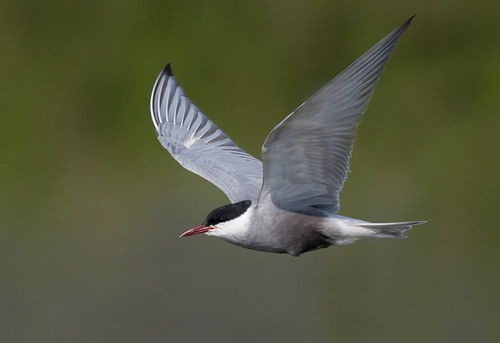
Whiskered Tern
Chlidonias hybrida
A graceful master of the marsh, the Whiskered Tern combines the elegance of a swallow with the precision of a predator. With its distinctive white cheeks and smoky grey plumage, it is a seasonal highlight for any wetland watcher.
Quick Identification
Size
Length: 24–28 cm (9.5–11 in); Wingspan: 74–78 cm (29–31 in); Weight: 80–100 g (2.8–3.5 oz)
Colors
Breeding adults have a black cap, white cheeks, and dark grey underparts. The bill and legs are deep red. Non-breeding adults are much paler with white foreheads and a black patch behind the eye.
Key Features
- Distinctive white cheek stripe below a black cap (breeding)
- Dark grey belly contrasting with lighter wings
- Short, slightly forked tail compared to sea terns
- Thick-set, dark red bill
When You’ll See Them
Behavior
Whiskered Terns are socially active birds often found in small, chatty colonies. Unlike their coastal cousins that dive deep into the ocean, these "marsh terns" prefer freshwater environments where they hunt with surgical precision. You'll often see them patrolling back and forth over a specific patch of water, hovering briefly before dipping down to snatch prey from the surface without fully submerging.
They are highly migratory in many parts of their range, often traveling in loose flocks across continents. While they aren't typical backyard birds in a suburban sense, they are frequently spotted by those living near wetlands, reservoirs, or even large rice paddies. They are generally vocal, making a raspy 'kerr' or 'skerr' call as they forage, which can help AI cameras with audio detection identify them even before they enter the frame.
EverydayEarth exclusive
Camera Tips
To capture the best footage of Whiskered Terns, position your camera near floating vegetation or the edges of a freshwater pond. Since these birds are "dippers" rather than divers, they often land on lily pads or floating debris to rest and preen. Placing a camera on a low-profile tripod or a floating mount just a few inches above the water line will provide that professional 'eye-level' perspective that makes for stunning, intimate captures.
Because they are fast-moving and agile, use a high shutter speed setting if your camera allows manual overrides. If you are using a trigger-based trail camera, set it to 'Burst Mode' or 'Rapid Fire' to increase your chances of catching the exact moment they strike the water. Lighting is crucial; aim the camera with the sun at your back during the golden hours—early morning or late afternoon—to highlight the contrast of their black caps and white whiskers against the water.
While you shouldn't use traditional birdseed, you can encourage them to visit a specific camera zone by maintaining a healthy, chemical-free pond environment that naturally attracts dragonflies and small fish. Avoid placing the camera in high-wind areas, as the Whiskered Tern’s flight is very buoyant and they may struggle to stay within a narrow frame if the air is too turbulent. If you have a dock or a pier, mounting a camera on a corner post looking outward toward a reed bed is often the 'sweet spot' for capturing their acrobatic foraging flights.
Similar Species
Species that look similar or are commonly confused with Whiskered Tern.
Frequently Asked Questions
Record Whiskered Tern at your habitat
Connect a camera to start building your own species record — AI identifies every visitor automatically.