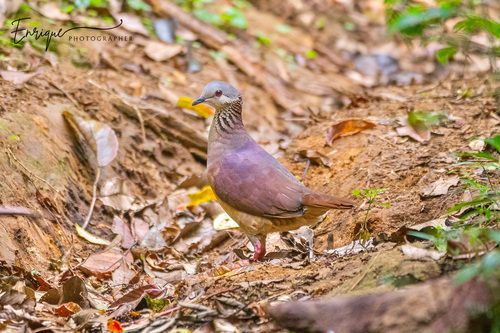
White-faced Quail-Dove
Zentrygon albifacies
A secretive gem of the montane understory, the White-faced Quail-Dove is rarely seen by the casual observer. With its ghost-like white face and rich cinnamon plumage, it is one of the most rewarding captures for any backyard wildlife enthusiast.
Quick Identification
Size
28-36 cm (11-14 in) in length; weighs approximately 260-360g (9-12.7 oz)
Colors
Distinctive creamy-white forehead and face; rich cinnamon-brown to purplish-rufous back and wings; pale gray breast transitioning to a buff-colored belly.
Key Features
- Striking white face and throat with a dark line behind the eye
- Rich reddish-cinnamon upperparts with a faint purple sheen
- Heavy-bodied, ground-dwelling silhouette
- Dull red legs and feet
When You’ll See Them
Behavior
The White-faced Quail-Dove is a shy, terrestrial specialist that spends the vast majority of its life on the forest floor. Unlike many other pigeons, it rarely takes to the trees unless it is startled or seeking a safe spot to roost for the night. They are typically found alone or in pairs, walking with a deliberate, rhythmic bobbing of the head as they search for food among the leaf litter.
These birds are master hiders; when they sense a threat, they often freeze in place, relying on their warm-toned plumage to blend into the shadows of the forest floor. If pressed, they will explode into a short, low-altitude flight with a characteristic whirring of wings. Because of their secretive nature, they are much more frequently heard than seen, producing a low-pitched, haunting 'whooo' that can be difficult to pinpoint in the dense cloud forest.
EverydayEarth exclusive
Camera Tips
Capturing a White-faced Quail-Dove requires a strategy focused on the ground. Because these birds are strictly terrestrial foragers, your camera should be mounted very low—no more than 6 to 12 inches off the forest floor. Angle the lens slightly upward if the terrain is flat, or place it on a gentle slope where the bird might walk across the frame. They prefer 'corridors' within the undergrowth, so look for natural gaps in the vegetation or alongside fallen logs where they feel safe moving under cover.
Standard trail camera triggers can sometimes be too slow for these birds, as they move with a stop-and-start rhythm. Use a camera with a high-speed trigger (0.2 seconds or faster) and set it to take short video clips (10-15 seconds). Video is especially valuable for identifying this species, as it captures the distinctive head-bobbing walk and the white facial markings that might be blurred in a still photo. Ensure your PIR sensitivity is set to 'High' to detect their relatively small heat signature.
To encourage a White-faced Quail-Dove to linger in front of your lens, create a 'micro-habitat' in the frame. Clearing a small patch of heavy leaf litter to reveal bare soil can attract them, as they are naturally drawn to areas where foraging is easier. If your local regulations allow, a small amount of cracked corn or wild bird seed scattered in this cleared patch can act as an effective lure. However, the most consistent lure is actually water; a shallow, ground-level birdbath or a simple dripping water feature in a quiet, shaded corner of your yard will almost certainly draw them in during the drier months.
Since they prefer the deep shade of the forest understory, lighting can be a challenge. If your camera has adjustable infrared settings, use 'Medium' or 'Low' glow to avoid washing out the bird's white facial features in low-light morning hours. Placing the camera facing North or South will help prevent lens flare and harsh shadows that could confuse the AI detection or ruin the exposure of the bird's rich, cinnamon-colored plumage.
Similar Species
Species that look similar or are commonly confused with White-faced Quail-Dove.
Frequently Asked Questions
Record White-faced Quail-Dove at your habitat
Connect a camera to start building your own species record — AI identifies every visitor automatically.