White Royal
Pratapa deva
A master of deception and a jewel of the forest canopy, the White Royal captivates with its brilliant iridescent blue wings and delicate, dancing tails. Spotting this elusive butterfly in your backyard is a sign of a truly healthy local ecosystem.
Quick Identification
Size
Wingspan of 33-38 mm (1.3-1.5 inches)
Colors
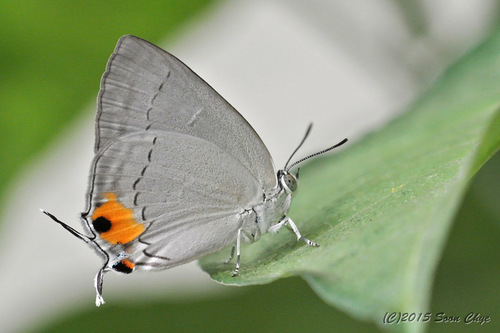
Brilliant royal blue upper wings with black borders in males; females are a paler, duller blue. Underside is creamy white or pale gray with a thin black post-discal line.
Key Features
- Two long, white-tipped filamentous tails on each hindwing
- Brilliant iridescent blue upper side visible during flight
- Thin, continuous black line on the pale underside
- Two distinct orange-crowned black spots near the tail base
When You’ll See Them
Behavior
The White Royal is a fast and powerful flier that spends much of its time in the forest canopy. Despite their delicate appearance, males are highly territorial; they often choose a prominent 'sentry' leaf high above the ground, from which they dart out to chase away any intruding butterflies. This aggressive behavior makes them easier to spot if you look toward the tops of flowering trees.
When they descend to the garden level, they do so mainly to feed on nectar or to allow females to deposit eggs. Like many members of the Lycaenidae family, they exhibit a 'false head' strategy. By twitching their hindwings, the long tails mimic antennae, and the orange spots mimic eyes. This decoys predators into attacking the expendable wing edges rather than the butterfly's actual head.
EverydayEarth exclusive
Camera Tips
To capture the White Royal on a backyard camera, placement is everything. Since these butterflies are canopy-dwellers that only descend for specific resources, you should position your camera near their known host plants—specifically mistletoe (Loranthus) growing on older trees. If you can't reach the canopy, focus your camera on sun-drenched flowering shrubs like Lantana or Ixora, which act as powerful nectar lures during the morning hours.
Because the White Royal is a rapid flier, set your AI camera to a high shutter speed (at least 1/1000s) to freeze the motion of its brilliant blue wings. If your camera allows for focal range adjustment, set a narrow depth of field to make the butterfly pop against the greenery. These butterflies are attracted to the salt in bird baths or damp soil, so placing a 'puddling' station with moist sand and a pinch of sea salt in a sunny spot can provide an excellent, low-level photo opportunity.
Lighting is crucial for capturing the iridescence of the male's blue wings. Position your camera with the sun behind it (front-lighting the subject) between 9 AM and 11 AM. This is when the butterflies are most active in thermoregulating, often basking with their wings partially open to catch the morning rays. If you are using a trail camera, ensure it has a macro or close-focus lens attachment, as these butterflies are small and detail-rich.
During the peak monsoon and post-monsoon months, check your camera's SD card frequently. The White Royal is highly sensitive to humidity and light changes; they are most likely to appear immediately after a rain shower when the sun breaks through the clouds. Set your camera to 'burst mode' to capture the specific moment they twitch their hindwings, which is a signature behavior of this species.
Similar Species
Species that look similar or are commonly confused with White Royal.
Frequently Asked Questions
Record White Royal at your habitat
Connect a camera to start building your own species record — AI identifies every visitor automatically.