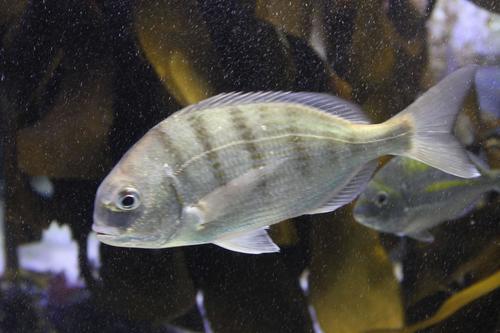
White Stumpnose
Rhabdosargus globiceps
The White Stumpnose is the silver ghost of Southern Africa’s coastal waters, a master of the surf zone known for its distinctive blunt profile and social shoaling nature.
Quick Identification
Size
Typically 30–45 cm (12–18 inches) in length, reaching up to 50 cm (20 inches); weighs up to 3 kg (6.6 lbs)
Colors
Brilliant silver-white body with 5-7 dark vertical bars; fins are generally translucent with golden-yellow tints on the pelvic and anal fins
Key Features
- Deep, compressed oval-shaped body
- Blunt, rounded head profile with a small mouth
- 5-7 distinct dark vertical bars on the sides
- Strong, molar-like teeth for crushing shells
When You’ll See Them
Geographic range
Where Does the White Stumpnose Live?
The White Stumpnose is a proud endemic of Southern Africa, meaning it is found nowhere else on Earth. Its primary range extends from the cool Atlantic waters of northern Namibia, around the Cape of Good Hope, and along the Indian Ocean coastline to the Eastern Cape of South Africa. It thrives in the temperate transition zones where cold and warm currents mingle, making the South African coastline its perfect home.
Basemap © OpenStreetMap contributors
Behavior
The White Stumpnose is a highly social and gregarious species, often found in large, shimmering shoals that navigate the turbulent surf zones and calm estuarine waters. They are primarily benthic feeders, which means they spend their time patrolling the sea floor, using their specialized blunt snouts to root through sand and gravel in search of hidden prey. This 'rooting' behavior is a hallmark of the species and makes them fascinating to watch on underwater cameras.
As they mature, White Stumpnose exhibit a seasonal migratory pattern, moving from nursery estuaries into the open ocean to spawn. They are known for being somewhat cautious but can become quite bold when food is present. In South African culture, they are affectionately known as 'Stumpies' or 'go-home fish,' a name derived from the local angling wisdom that when the Stumpnose start biting in abundance, you’ve caught enough to head home for the day.
EverydayEarth exclusive
Camera Tips
To capture the White Stumpnose on camera, you will need a waterproof action camera or a dedicated underwater housing system. The best placement is in shallow, sheltered estuaries or tidal pools during a rising tide. Use a weighted base or a heavy tripod to ensure the camera doesn't tumble in the surge; the weight of the water movement is often stronger than it appears, and a steady shot is key to seeing the fine details of their silver scales.
Lighting is your biggest challenge under the waves. Because the White Stumpnose is highly reflective, direct sunlight near the surface can cause 'blown-out' highlights on their bodies. Position your camera at a slight downward angle toward a sandy patch near a rocky outcrop. This provides a natural, darker background that helps the silver fish pop in the frame. If you are filming in the slightly murky water of an estuary, keep the camera within two feet of your 'target zone' to maintain clarity.
Attracting them is relatively simple: use a small mesh 'chum bag' filled with crushed mussels or sand prawns. Secure this bag just out of the camera's view or behind a small rock in the foreground. The scent will draw in a shoal, and you’ll likely capture their unique feeding behavior as they pivot vertically to nip at the source of the scent. For the best results, set your camera to a high frame rate (60fps or higher) to capture the quick, flickering movements of the shoal as they dart in and out of the frame.
Similar Species
Species that look similar or are commonly confused with White Stumpnose.
Frequently Asked Questions
Record White Stumpnose at your habitat
Connect a camera to start building your own species record — AI identifies every visitor automatically.