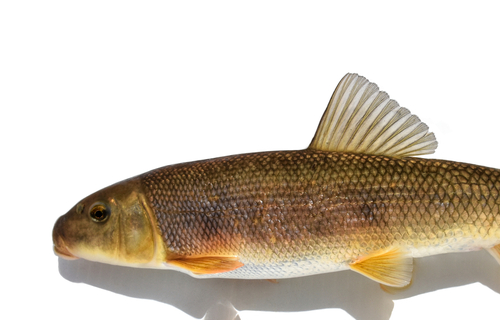
White Sucker
Catostomus commersonii
The unassuming White Sucker is the freshwater world's most successful recycler. With its specialized suction mouth and incredible spring migrations, this native fish is a hidden gem of North American waterways.
Quick Identification
Size
Typically 10–20 inches (25–50 cm) long and weighing 2–5 lbs (0.9–2.3 kg); record specimens can reach 24 inches.
Colors
Olive-brown to dark charcoal upper body with a brassy or silvery luster on the sides and a contrasting cream or white underbelly.
Key Features
- Downward-facing mouth with thick, fleshy lips
- Torpedo-shaped, cylindrical body
- Large scales that become smaller and more crowded near the head
- Single dorsal fin located mid-back
When You’ll See Them
Behavior
White Suckers are the industrious 'vacuum cleaners' of freshwater ecosystems. Primarily bottom-dwellers, they spend the majority of their time scouring the substrates of streams, rivers, and lakes for organic matter. They are highly sensitive to vibrations and movement above the water, often darting into deeper pools or under submerged logs at the slightest hint of a predator or a human observer.
The most notable behavioral event for this species is the annual spring spawning run. When water temperatures reach the 40s and 50s (Fahrenheit), thousands of suckers migrate from deep wintering holes into shallow, rocky tributaries. During this time, they become much more social and visible, often seen in large groups navigating riffles. Despite their common name, they are a vital 'forage fish,' providing a high-protein food source for eagles, otters, and large predatory fish like muskie and pike.
EverydayEarth exclusive
Camera Tips
Capturing high-quality footage of the White Sucker requires a shift in thinking from traditional trail cameras to underwater placement. For the best results, use an action camera like a GoPro on a weighted floor mount. During the spring spawning run (April to May), look for shallow 'runs' or riffles where the water is 6 to 18 inches deep. Place the camera in a spot where the current is steady but not turbulent, aiming it slightly upstream at a 45-degree angle. This allows the fish to swim toward the lens as they battle the current, providing clear head-on shots of their unique mouth structures.
If you are using a standard trail camera mounted on a bank or a bridge over a suburban creek, height and lens filtration are your best friends. Mount the camera as vertically as possible over a clear, shallow pool. The use of a circular polarizer filter over the camera lens is a game-changer; it cuts through the surface glare and 'windowing' effect of the water, allowing the sensor to focus on the fish rather than the reflections on the surface. Set your camera to video mode with a high frame rate (60fps or higher) to capture the fluid motion of their swimming and foraging behaviors.
Lighting is the final hurdle for the perfect sucker shot. Because they are most active during the crepuscular hours of dawn and dusk, look for spots where the morning sun hits the water at a low angle, illuminating the stream bed. If your camera has adjustable sensitivity, set it to a higher ISO for these low-light periods. Avoid using standard white-light flashes at night, as the sudden burst can cause the fish to bolt; instead, rely on 'No-Glow' or high-frequency infrared LEDs which are less likely to penetrate the water column in a way that startles them.
Finally, focus on the 'messy' parts of the stream. White Suckers are attracted to areas with plenty of 'drift'—organic debris and insects floating near the bottom. If you have a backyard creek, you can encourage them to linger in front of your camera by placing a few medium-sized, flat rocks in the current to create a 'slack-water' pocket. The fish will naturally use these pockets to rest while moving upstream, giving your camera more time to trigger and record their presence.
Similar Species
Species that look similar or are commonly confused with White Sucker.
Frequently Asked Questions
Record White Sucker at your habitat
Connect a camera to start building your own species record — AI identifies every visitor automatically.